
🌞 Introduction
Vitamin D — often called the “sunshine vitamin” — plays a crucial role in maintaining healthy bones, muscles, and the immune system. Despite its importance, over one billion people worldwide are estimated to have low vitamin D levels.
The problem? Most people don’t even realize they’re deficient until the symptoms become serious. In this post, we’ll explore the most commonly ignored signs of vitamin D deficiency, its causes, and simple ways to restore your levels naturally.

🌤️ What Is Vitamin D and Why Do We Need It?
Vitamin D is a fat-soluble vitamin that helps the body absorb calcium and phosphorus — minerals essential for bone strength and immune function. It’s unique because our skin can produce it when exposed to sunlight.
Functions of Vitamin D:
- Strengthens bones and teeth
- Supports the immune system
- Improves muscle function
- Regulates mood and reduces depression risk
- Helps prevent chronic diseases like diabetes and heart problems
When you lack this vitamin, it can affect nearly every system in your body.
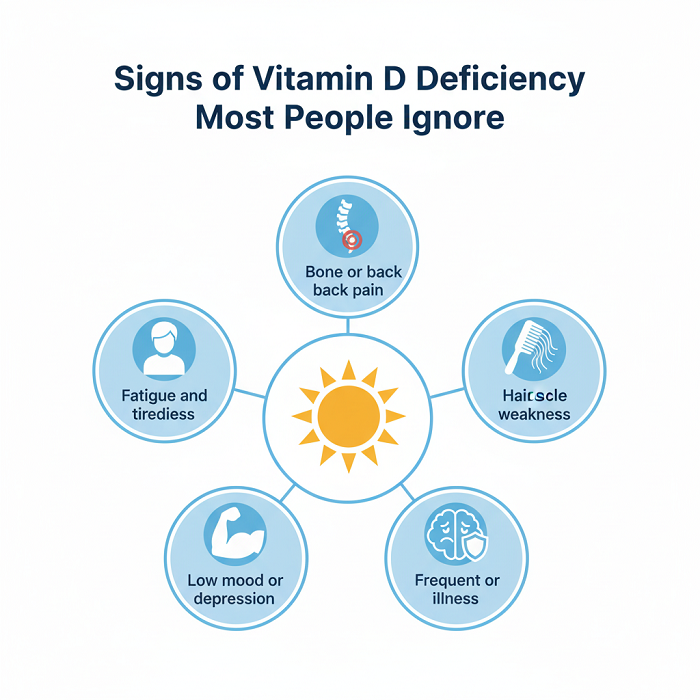
⚠️ 1. Constant Fatigue and Low Energy
Feeling tired even after a full night’s sleep? You might blame stress or lack of coffee — but low vitamin D could be the hidden cause.
Vitamin D helps convert food into energy efficiently. When levels drop, your body’s energy production slows down, making you feel drained all day.
Tip: Get your vitamin D levels checked if you feel tired for no reason, especially during winter months when sunlight exposure is minimal.
😣 2. Bone and Back Pain
One of the most common but overlooked signs of vitamin D deficiency is pain in bones, joints, or lower back.
This vitamin helps your body absorb calcium. Without it, bones become weak and prone to pain or fractures, even with minor stress.
Fact: Studies have shown that people with chronic back pain often have low vitamin D levels.

😔 3. Frequent Illness or Weakened Immunity
If you catch colds, flu, or infections more often than usual, your immune system might be struggling — and vitamin D plays a major role here.
It helps activate immune cells that fight off viruses and bacteria. Low vitamin D levels can leave your body defenseless.
Did you know?
Children with vitamin D deficiency are more likely to get respiratory infections.
💔 4. Mood Swings and Depression
Vitamin D receptors are found in areas of the brain responsible for mood regulation. Low levels can lead to anxiety, mood swings, or depression, especially during darker seasons.
Tip: Spending just 15–20 minutes in sunlight daily can help boost your mood naturally.

🦴 5. Slow Healing of Wounds
If your cuts or bruises take longer than usual to heal, you might have low vitamin D levels. It supports the production of new skin cells and helps in tissue repair.
People with vitamin D deficiency often experience slow wound healing after surgery, injury, or infection.
😬 6. Hair Loss or Thinning Hair
Hair loss is often linked to stress, but vitamin D deficiency can also be a hidden cause. The vitamin plays a role in hair follicle growth.
Severe deficiency can even contribute to alopecia areata, an autoimmune condition that causes bald patches.

😴 7. Muscle Weakness or Pain
Muscles have vitamin D receptors. When levels are low, you may feel muscle pain, cramps, or weakness — even if you’re physically active.
Older adults especially are at risk, leading to difficulty walking or climbing stairs.
🌧️ 8. Excessive Sweating (Especially on the Head)
This is one of the earliest and most ignored signs of vitamin D deficiency.
If your head sweats excessively even in cool conditions, it could be a signal your body is lacking vitamin D.
🍽️ Common Causes of Vitamin D Deficiency
Even though sunlight is the main source, there are many other reasons people still end up deficient:
- Spending too much time indoors
- Living in areas with little sunlight
- Using sunscreen excessively
- Having darker skin (melanin reduces vitamin D synthesis)
- Poor diet (low in fish, eggs, or fortified milk)
- Obesity or digestive issues affecting absorption
🍳 How to Increase Vitamin D Naturally
- Get Sunlight:
Spend 15–30 minutes in early morning sunlight at least 3–4 times a week. - Eat Vitamin D–Rich Foods:
Include salmon, sardines, egg yolks, fortified milk, and mushrooms in your diet. - Take Supplements (if needed):
If your blood test shows low levels, your doctor might recommend vitamin D3 supplements. - Exercise Regularly:
Helps improve absorption and bone strength. - Maintain a Healthy Weight:
Fat tissue can trap vitamin D, reducing its availability in the blood.
🧠 Final Thoughts
Vitamin D is one of the simplest yet most powerful nutrients your body needs. Unfortunately, most people ignore its warning signs until they develop chronic fatigue, weak bones, or mood issues.
By getting enough sunlight, eating the right foods, and monitoring your levels, you can easily prevent deficiency — and protect your long-term health.
So, if you’ve been feeling “off” lately, don’t ignore it — your body might just be asking for a little sunshine!