
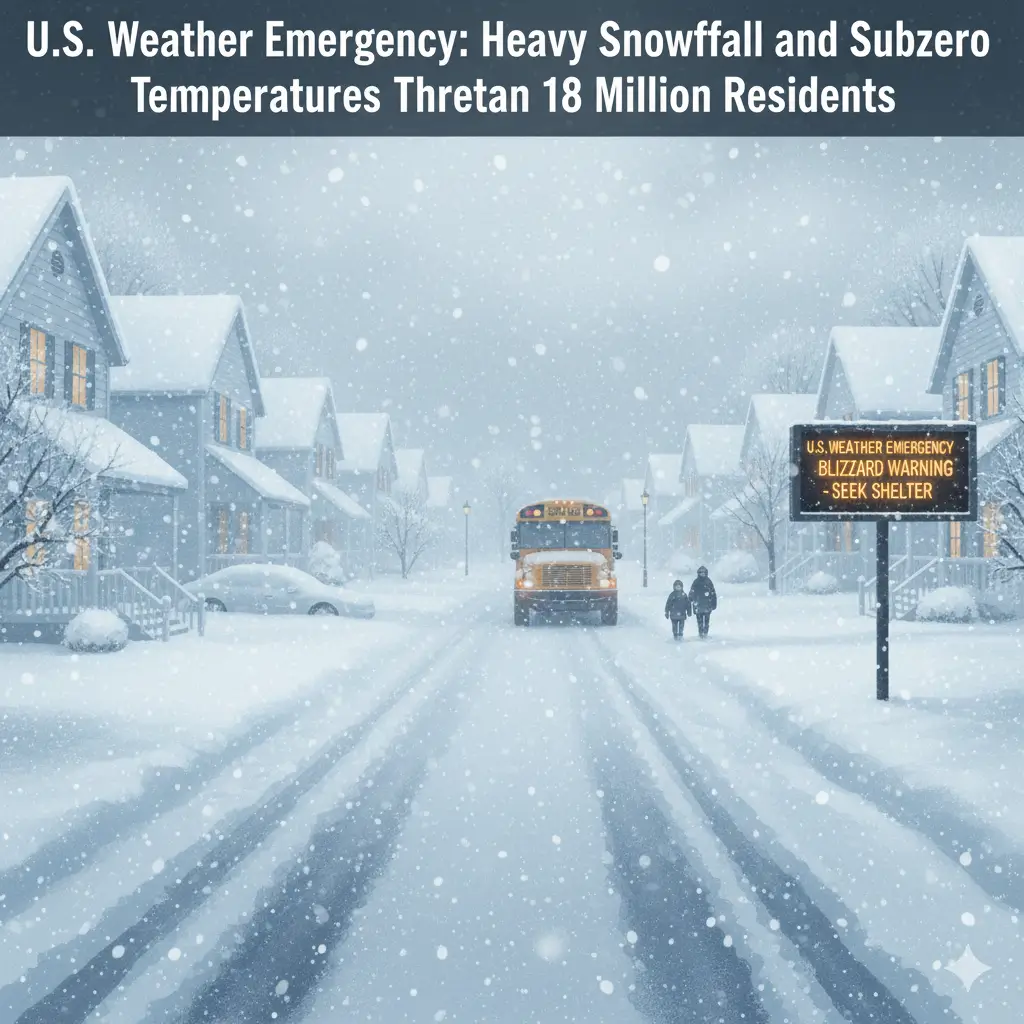
A Dangerous Winter Storm Is Gripping the United States
A powerful winter storm is sweeping across the western and Midwestern United States, bringing heavy snowfall, subzero temperatures, and life-threatening conditions to an estimated 18 million residents. From Minnesota to North Dakota and beyond, communities are battling one of the most intense early-season storms in recent memory. Roads are buried under feet of snow, power lines are buckling under the weight of ice, and emergency services are stretched to their limits. This is not simply cold weather — it is a full-scale U.S. winter storm emergency that demands attention, preparation, and swift action.
Related: How Extreme Weather Events Are Changing Across the U.S.
Why This Winter Storm Stands Apart From Typical Cold Spells
Meteorologists and officials from the National Weather Service have been clear: this storm carries an unusual and dangerous intensity. Unlike routine winter weather events, the current conditions combine extreme snowfall accumulation with temperatures that plunge well below zero — a combination that creates risks far beyond a slippery morning commute.
- Subzero temperatures can cause frostbite on exposed skin in under 30 minutes.
- Roads that have been plowed can become covered again within the hour.
- Visibility in some areas has dropped to near zero, making travel genuinely hazardous.
The National Oceanic and Atmospheric Administration (NOAA) is monitoring atmospheric patterns suggesting this cold air mass could settle over affected states for several days, prolonging emergency conditions significantly. For many residents, this storm echoes the devastating 2021 Texas freeze — an event that caught millions off guard and exposed critical weaknesses in infrastructure during extreme cold.
Related: Lessons Learned From the 2021 Texas Winter Freeze
Real Stories From the Front Lines of the Storm
A Family Stranded in Minnesota
One account that has captured widespread attention involves a Minnesota family who set out for what they expected to be a routine grocery run. Within an hour, rapidly intensifying snowfall blocked major roads and their vehicle became stuck. As temperatures continued to fall, the family waited in their car for emergency responders. The mother later recalled that the greatest fear was not the snow itself, but how shockingly fast conditions escalated. They were rescued safely, but their story resonates because it could happen to anyone who underestimates this storm.
A School Bus Driver Keeps Children Calm in North Dakota
In North Dakota, a school bus driver was mid-route when visibility dropped so suddenly that he could barely see a few feet ahead. Rather than panic, he pulled over safely and kept the children calm while waiting for authorities to clear the way. His composed and measured response highlights a critical truth about winter emergencies: preparation and a calm head can be the difference between a frightening situation and a tragic one.
How the Storm Is Disrupting Daily Life
The ripple effects of this winter emergency are being felt across multiple sectors of everyday life. Hundreds of flights have been cancelled at regional airports, stranding travelers and disrupting logistics networks. Schools across several states have closed, forcing parents to juggle childcare while navigating hazardous conditions outside. Supply chains for food, medicine, and fuel are experiencing serious delays as trucking companies pause routes on impassable highways.
Hospitals are bracing for a surge in cold-related injuries. According to guidance from the Mayo Clinic, hypothermia can develop rapidly in extreme cold — even in individuals who are simply underdressed. Emergency rooms are already seeing increased cases of frostbite, particularly among outdoor workers such as delivery drivers, postal workers, and construction crews who cannot afford to stay home.
Farmers in affected regions are working around the clock to protect livestock, ensuring animals have adequate shelter and access to water that has not frozen solid. Rural communities face additional challenges, as emergency response times are longer and power outages can stretch for days without quick resolution.
The Emotional Toll on Communities
Beyond the physical dangers, prolonged winter emergencies carry a significant emotional weight that is easy to overlook. Parents worry about keeping children warm through the night. Elderly residents fear falls on icy sidewalks or losing heat in their homes. Small business owners watch forced closures eat into their income with no clear end in sight.
Community mental health experts note that extended weather emergencies can trigger anxiety and feelings of helplessness across all age groups. Staying connected with neighbors, maintaining daily routines where safely possible, and limiting excessive consumption of alarming news coverage are all practical strategies that can help people manage the stress and uncertainty these events bring.
Related: Mental Health Tips During Natural Disasters and Emergencies
How Authorities and Emergency Services Are Responding
Local and state governments have activated emergency operations centers across the affected region. Warming shelters have opened in multiple cities to protect residents without reliable heating. Snowplows are operating continuously, though in the hardest-hit areas, fresh snowfall is undoing progress almost as fast as it is made. The National Guard has been mobilized in several states to assist with rescues and road clearing operations.
Officials are issuing consistent, urgent guidance: avoid all unnecessary travel, check on elderly neighbors, and report downed power lines immediately. These coordinated actions at the community level can prevent tragedies and meaningfully reduce the burden placed on emergency services.
Essential Winter Safety Tips to Follow Right Now
- Stay indoors unless travel is absolutely necessary. Always inform someone of your route if you must go out.
- Layer clothing properly — use moisture-wicking base layers, insulating mid-layers, and waterproof outer layers to retain body heat effectively.
- Keep devices charged and have a battery-powered or hand-crank radio available in case of power outages.
- Prepare an emergency kit that includes water, non-perishable food, medications, flashlights, and warm blankets for at least 72 hours.
- Use space heaters safely — never use gas stoves, grills, or generators indoors, as they produce carbon monoxide, which can be fatal in enclosed spaces.
- Check on vulnerable neighbors, particularly elderly individuals and those living alone, who may need immediate assistance.
- Monitor the National Weather Service for the latest forecasts, warnings, and emergency advisories in your specific area.
What to Expect in the Coming Weeks
Meteorologists warn that the atmospheric patterns driving this storm suggest a potentially prolonged cold period for much of the central and western United States. Additional storms may follow, and residents should treat this event not as a one-time disruption but as a clear signal to maintain heightened preparedness throughout the entire winter season.
The tools available today — real-time weather apps, community alert systems, and improved emergency infrastructure — give people more information and options than ever before. But technology only helps when people act on it early. The most effective safety measure in any winter emergency is making smart decisions before conditions become critical, not after they already have.
Related: Best Weather Apps to Track Severe Winter Storms in Real Time
Conclusion
The current U.S. winter storm emergency is a sobering reminder that nature operates on its own terms, regardless of our schedules or plans. Heavy snowfall and subzero temperatures are not merely inconveniences — they are genuine threats to life and well-being for millions of Americans. By staying informed, preparing in advance, and looking out for one another, communities can navigate even the most severe winter conditions. Stay safe, stay warm, and never hesitate to contact local emergency services if you or someone you know is in danger. Share this article with friends and family to help keep everyone informed and prepared.
Frequently Asked Questions About the U.S. Winter Storm Emergency
Which states are most affected by the current U.S. winter storm?
The storm has had its most severe impact across the western and Midwestern United States. States including Minnesota, North Dakota, South Dakota, Montana, Wyoming, and parts of the Great Lakes region are experiencing the heaviest snowfall and lowest temperatures. The National Weather Service has issued winter storm warnings and extreme cold advisories across a broad area stretching from the northern Rockies to the Upper Midwest. Residents in these regions should monitor local emergency alerts for the most current and location-specific guidance available.
How quickly can subzero temperatures cause harm to the human body?
Subzero temperatures are genuinely life-threatening and can cause harm faster than most people expect. Frostbite can begin developing on exposed skin in as little as 30 minutes when temperatures fall below minus 10 degrees Fahrenheit, especially when wind chill is factored in. Hypothermia — a dangerous drop in core body temperature — can set in even faster in wet or windy conditions. Children, the elderly, and individuals with certain medical conditions are especially vulnerable. Limiting outdoor exposure and dressing in multiple insulating layers remain the most effective defenses against cold-related injury.
What should I include in a winter emergency preparedness kit?
A well-stocked winter emergency kit should include at least 72 hours worth of non-perishable food and bottled water, a first aid kit, any necessary prescription medications, warm blankets and extra clothing, flashlights with spare batteries, a battery-powered or hand-crank radio, a portable phone charger, and basic tools such as a snow shovel and ice scraper. If you have infants, elderly family members, or pets in your household, make sure their specific needs are covered as well. Store the kit somewhere easily accessible so you can reach it quickly if power is lost or you need to shelter in place unexpectedly.
Is it safe to use a portable space heater or gas oven during a power outage?
Portable electric space heaters can be used safely when kept away from flammable materials, never left unattended, and plugged directly into a wall outlet rather than an extension cord. However, gas stoves, ovens, grills, and portable generators should never be used indoors as heating sources. These devices produce carbon monoxide, a colorless and odorless gas that can cause unconsciousness and death in enclosed spaces. The U.S. Fire Administration consistently reports a spike in carbon monoxide incidents during winter storms. If you use a generator, keep it at least 20 feet away from any windows, doors, or vents to prevent deadly gas from entering your home.
Where can I find reliable, up-to-date information during a winter weather emergency?
The most reliable sources for real-time winter emergency information are the National Weather Service and NOAA. Local government websites and official social media accounts are also valuable for region-specific updates on road closures, warming shelter locations, and emergency orders. Signing up for Wireless Emergency Alerts on your smartphone ensures you receive immediate notifications even when you are not actively monitoring news. Avoid relying solely on unofficial social media posts, as misinformation can spread rapidly during emergencies and lead to poor decision-making when it matters most.
