
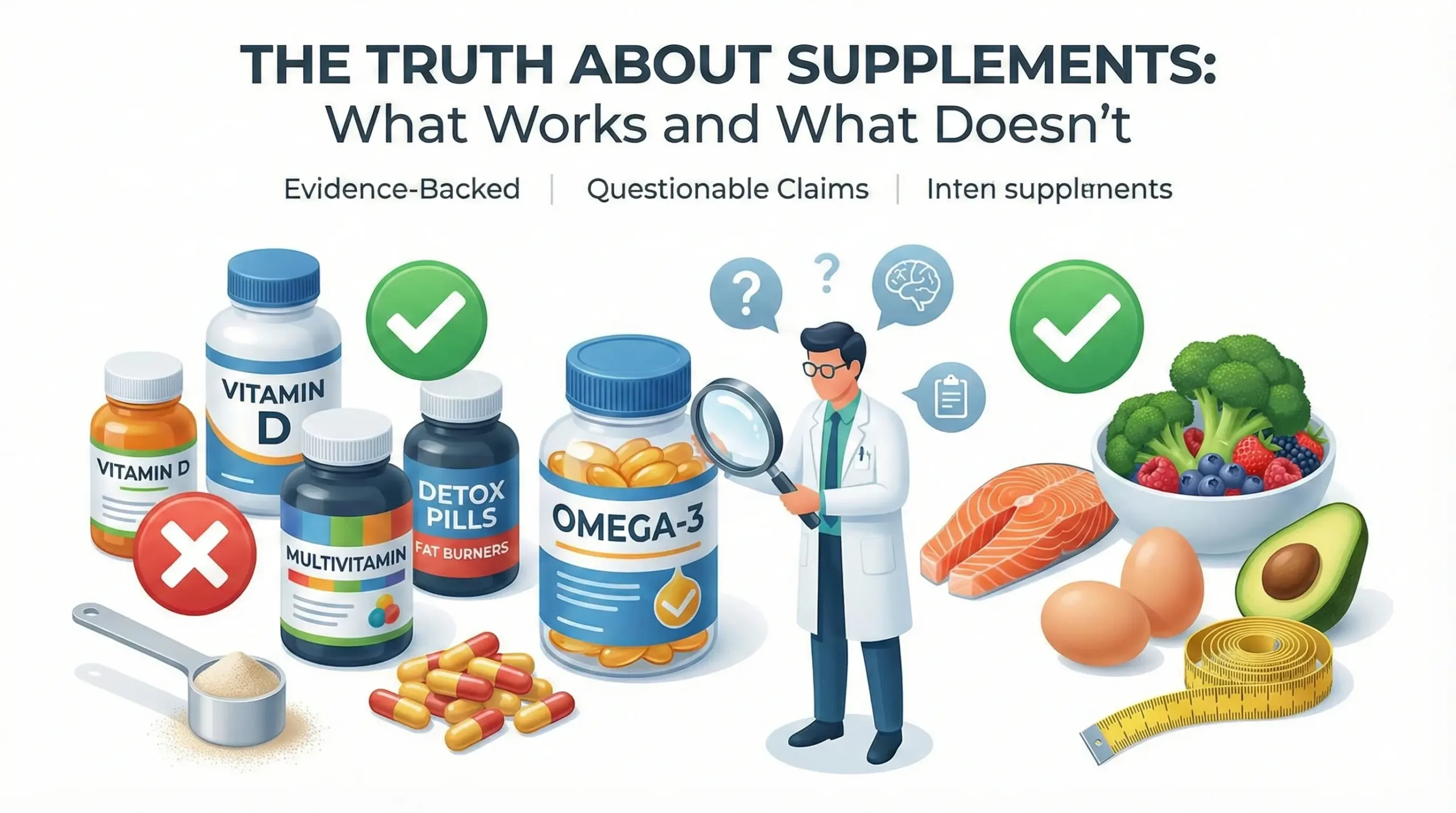
Do Supplements Actually Work? An Evidence-Based Guide
Walk into any pharmacy or scroll through social media for five minutes and you will find dozens of supplements promising to boost your energy, burn fat, sharpen your mind, and transform your body overnight. The global supplement industry generates hundreds of billions of dollars each year, fueled largely by clever marketing and the very human desire for quick results. But how many of these products actually deliver on their promises? The honest answer is that some supplements genuinely work, some only help in specific situations, and many fall far short of their bold claims. This evidence-based guide cuts through the noise and gives you a clear, science-backed look at the most popular supplements on the market today — so you can make smarter decisions for your health and your wallet.
Related: How to Build a Sustainable Fitness Routine From Scratch
Why People Turn to Supplements
Most people reach for supplements because they want to fix something — persistent fatigue, low mood, weakened immunity, slow gym progress, or poor sleep. Supplements feel like a manageable, actionable solution in a world where genuine lifestyle changes can feel overwhelming. And in some cases, they truly are helpful. But a supplement is only as effective as the context in which you use it.
If your body is genuinely deficient in a nutrient, correcting that deficiency can produce a noticeable and meaningful improvement in how you feel and function. If your levels are already adequate, taking more of that nutrient rarely adds any benefit and can sometimes cause unintended harm. The most important principle to internalize is this: supplements work best when your lifestyle fundamentals are already reasonably solid. Consistent sleep, balanced nutrition, proper hydration, and regular physical movement form the real foundation of good health. Supplements support that foundation — they do not replace it.
Supplements That Actually Work
Vitamin D
Vitamin D is one of the most well-researched and genuinely effective supplements available today. A significant portion of the global population is deficient, particularly people who work indoors, live in northern climates, or spend little time in direct sunlight. Low vitamin D levels are linked to persistent fatigue, muscle weakness, lowered immune function, poor bone density, and even depression-like symptoms. When deficiency is corrected through supplementation, many people report steady improvements in energy, mood, and overall wellbeing within several weeks of consistent use. It is not an instant fix, but the improvement is real and measurable. A simple blood test can confirm whether you are actually deficient before you spend money on a bottle. For more on vitamin D research, see the National Institutes of Health Vitamin D Fact Sheet.
Omega-3 Fatty Acids
Modern diets are often poorly balanced when it comes to healthy fats. Omega-3 fatty acids, found primarily in oily fish such as salmon, mackerel, and sardines, play a critical role in reducing systemic inflammation, supporting cardiovascular health, and maintaining cognitive function across all age groups. People who rarely eat fish can benefit significantly from omega-3 supplementation in the form of fish oil or algae-based capsules. The effects are gradual — reduced mental fog, improved cardiovascular markers, and better joint comfort tend to develop over six to eight weeks of consistent use. The research backing omega-3 is robust and well-replicated, making it one of the most reliably useful supplements available for a wide range of people. The American Heart Association endorses omega-3 intake for cardiovascular health.
Creatine
Creatine is arguably the most thoroughly studied performance supplement in existence, and the evidence for its effectiveness is overwhelming. It works by increasing the availability of adenosine triphosphate (ATP) — the primary energy currency of your muscles — during high-intensity exercise. This supports improvements in strength output, muscular endurance, and recovery between sets. It is not limited to elite athletes or bodybuilders. Even someone who lifts weights a few times a week can experience meaningful improvements in workout performance and reduced recovery time. Creatine builds up gradually in your muscles over one to two weeks of daily consistent use, so patience is required. It does not create a dramatic overnight surge of power, but the steady, cumulative benefit is well documented across hundreds of peer-reviewed studies.
Related: The Beginner’s Guide to Strength Training and Progressive Overload
Protein Powder
Protein powder is not a magical performance enhancer — it is essentially food in a convenient form. It is genuinely useful for people who consistently struggle to consume enough protein through their regular meals, including busy professionals, students, and anyone who does not cook frequently. Adequate daily protein intake supports muscle recovery after exercise, helps manage appetite by increasing satiety, and makes it easier to hit daily nutritional targets without meticulous meal planning. When used as a practical dietary tool rather than a miracle supplement, protein powder earns its place in a healthy routine. Whey, casein, and plant-based protein powders all offer comparable benefits when total protein intake and overall diet quality are considered.
Supplements That Overpromise and Underdeliver
Fat Burner Pills
Fat burner supplements are among the most aggressively marketed products in the entire wellness industry — and among the least effective. Most formulas rely heavily on stimulants such as caffeine, which temporarily increases heart rate, suppresses appetite, and creates a feeling of heightened alertness and energy. This can feel like meaningful progress, but it is largely a physiological illusion created by stimulant activity. Once the caffeine effect wears off, the underlying reality remains unchanged: without consistent dietary adjustments and regular physical activity, these pills produce no measurable fat loss. Many people cycle through multiple fat burner brands searching for the product that finally works, spending significant money and accumulating real frustration without achieving lasting results.
Detox Teas and Cleansing Products
The concept of detoxing your body with a special tea, juice cleanse, or powder sounds compelling in the context of modern wellness culture, but it fundamentally misunderstands how the human body actually works. Your liver, kidneys, lymphatic system, and skin are continuously and efficiently removing waste products and harmful substances every hour of every day. They do not need assistance from expensive herbal teas or powdered formulas. Detox products typically cause mild laxative effects or temporary water loss, which can feel like a meaningful cleanse but produces no lasting physiological benefit. Adequate hydration, quality sleep, and a nutrient-rich whole food diet provide genuine metabolic support far more effectively than any packaged detox product on the market.
Collagen Supplements
Collagen supplements occupy a nuanced middle ground. Some people report genuine improvements in joint comfort and skin hydration after consistent use over several months, while others notice no change at all. The research remains mixed and is not yet conclusive enough to make strong universal recommendations. Collagen is not a useless product by any means, but it is far from the transformative, age-reversing supplement that marketing materials frequently suggest. If you are curious, the risk profile is low and it is reasonable to try for eight to twelve weeks — but manage your expectations and look for hydrolyzed collagen peptides from reputable sources for the best absorption.
Related: How Sleep Quality Affects Muscle Recovery and Performance
How to Choose Supplements Wisely
The supplement industry is loosely regulated in most countries, including the United States, where products do not require FDA approval before going to market. This means that product quality, ingredient dosages, and label accuracy can vary enormously between brands. Some products contain doses far too small to produce any clinically meaningful effect. Others include ingredients with impressive-sounding names but minimal scientific support. When choosing a supplement, prioritize brands that offer transparent labeling, clinically effective dosages, and independent third-party testing through organizations such as NSF International or Informed Sport. A slightly higher price from a reputable, verified manufacturer is almost always a better investment than a cheap product that delivers nothing.
- Look for third-party certification — NSF, Informed Sport, or USP verification are reliable trust signals.
- Avoid proprietary blends that hide individual ingredient dosages behind a collective total weight.
- Start with a blood test if you suspect deficiencies, particularly for vitamin D, iron, or B12.
- Give supplements time — effective products work gradually over four to eight weeks, not overnight.
- Prioritize lifestyle first — sleep, nutrition, hydration, and exercise amplify every supplement’s effectiveness.
Real-World Lessons: Why Context Matters
One of the most common supplement mistakes is buying products based on social media trends rather than genuine personal need. A person who spends months taking hair vitamins, metabolism boosters, and gut cleansers without noticing any improvement may simply be taking the wrong things for their actual biology. A basic blood panel revealing an iron deficiency or vitamin D insufficiency can point directly to the one supplement that will actually make a measurable difference in daily life. Targeted supplementation based on real physiological data consistently outperforms the expensive shotgun approach of buying everything that looks impressive in an Instagram advertisement.
Experienced fitness professionals observe the same pattern repeatedly. Clients who prioritize quality sleep, eat balanced whole food meals, stay properly hydrated, and train consistently tend to progress significantly faster than those who rely heavily on elaborate supplement stacks. This does not mean supplements have no value — it means they function as precision tools within a healthy lifestyle, not as shortcuts around the work that lifestyle demands. Consistency beats capsules, every single time.
Conclusion: Make Supplement Decisions Based on Evidence
Supplements are neither miracle solutions nor outright scams — they are tools, and like any tool, their value depends entirely on how and when you use them. Vitamin D, omega-3 fatty acids, creatine, and protein powder have genuine, well-supported benefits for the right people in the right situations. Fat burners, detox teas, and many trendy wellness products, however, rely far more on marketing psychology than on science. The smartest approach is to build a solid lifestyle foundation first, get your blood levels tested if you suspect deficiencies, choose reputable products with transparent labeling and third-party verification, and give effective supplements enough time to work. When you make decisions based on evidence rather than advertising, you protect both your long-term health and your hard-earned money. Start with one or two targeted supplements based on your actual needs, track how you feel over six to eight weeks, and adjust from there — that is the practical, science-backed approach that consistently delivers real results.
Frequently Asked Questions About Supplements
Do I need to take supplements if I already eat a balanced diet?
Not necessarily, but certain gaps are surprisingly common even among people who eat reasonably well. If your diet is genuinely varied and nutritious, and you spend adequate time outdoors in sunlight, you may not need most supplements. However, vitamin D deficiency is widespread due to modern indoor lifestyles, and omega-3 intake tends to be low in diets that do not include regular oily fish consumption. Getting a blood test is the most reliable way to determine whether your nutrient levels are actually optimal or whether targeted supplementation would benefit your specific situation. Do not assume a balanced diet covers everything without verifying it.
Are expensive supplements always better than cheaper alternatives?
No — price alone is not a reliable indicator of supplement quality. Some premium-priced products offer little more than attractive packaging and heavy marketing spend, while some affordable options use well-researched formulas at clinically effective doses. What matters most is whether the product contains evidence-backed ingredients at proven dosages, and whether it has been independently verified by a credible third-party testing organization. Always check the label for transparent ingredient lists with specific dosages, and be cautious of products that use proprietary blends that obscure individual amounts behind a single combined weight figure.
How long should I take a supplement before deciding if it works?
This depends significantly on the supplement and what it is addressing. Vitamin D levels typically begin improving noticeably after four to six weeks of consistent daily supplementation, with full correction of severe deficiency sometimes taking three to six months. Omega-3 benefits such as reduced inflammation markers and improved cardiovascular indicators tend to become apparent after six to eight weeks of use. Creatine generally reaches effective muscle saturation within one to two weeks of daily dosing. Expecting overnight results from any evidence-based supplement is one of the most common causes of premature abandonment. Commit to at least four to eight weeks of consistent use before evaluating whether a supplement is working for you.
Can supplements interact with medications or cause side effects?
Yes, supplements can cause harm if taken incorrectly or in excessive doses, and some interact meaningfully with prescription medications. High-dose vitamin D supplementation can cause toxicity over time, leading to hypercalcemia and kidney stress. Omega-3 at very high doses may affect blood clotting and could interact with anticoagulant medications. Some herbal supplements — including St. John’s Wort, valerian, and ginkgo biloba — interact with heart medications, blood thinners, and antidepressants in clinically significant ways. Always consult a qualified healthcare professional before starting any new supplement, particularly if you are managing a chronic health condition or taking prescription medications regularly.
Are fat burners and detox supplements safe to use?
Most fat burner supplements are not acutely dangerous when used as directed by healthy adults, but they carry real risks for people who are sensitive to stimulants or who have underlying cardiovascular conditions. High caffeine content can cause elevated heart rate, anxiety, disrupted sleep architecture, and stimulant dependency with regular use. Detox products are generally low-risk physiologically but offer no meaningful, measurable detoxification benefit beyond what your liver and kidneys already perform continuously. The primary concern with both categories is not just safety — it is the financial, psychological, and opportunity cost of believing these products will produce results they are fundamentally incapable of delivering. The time, money, and attention invested in fat burners and detox teas is almost always more effectively directed toward improving sleep quality, dietary choices, and consistent physical activity.
