
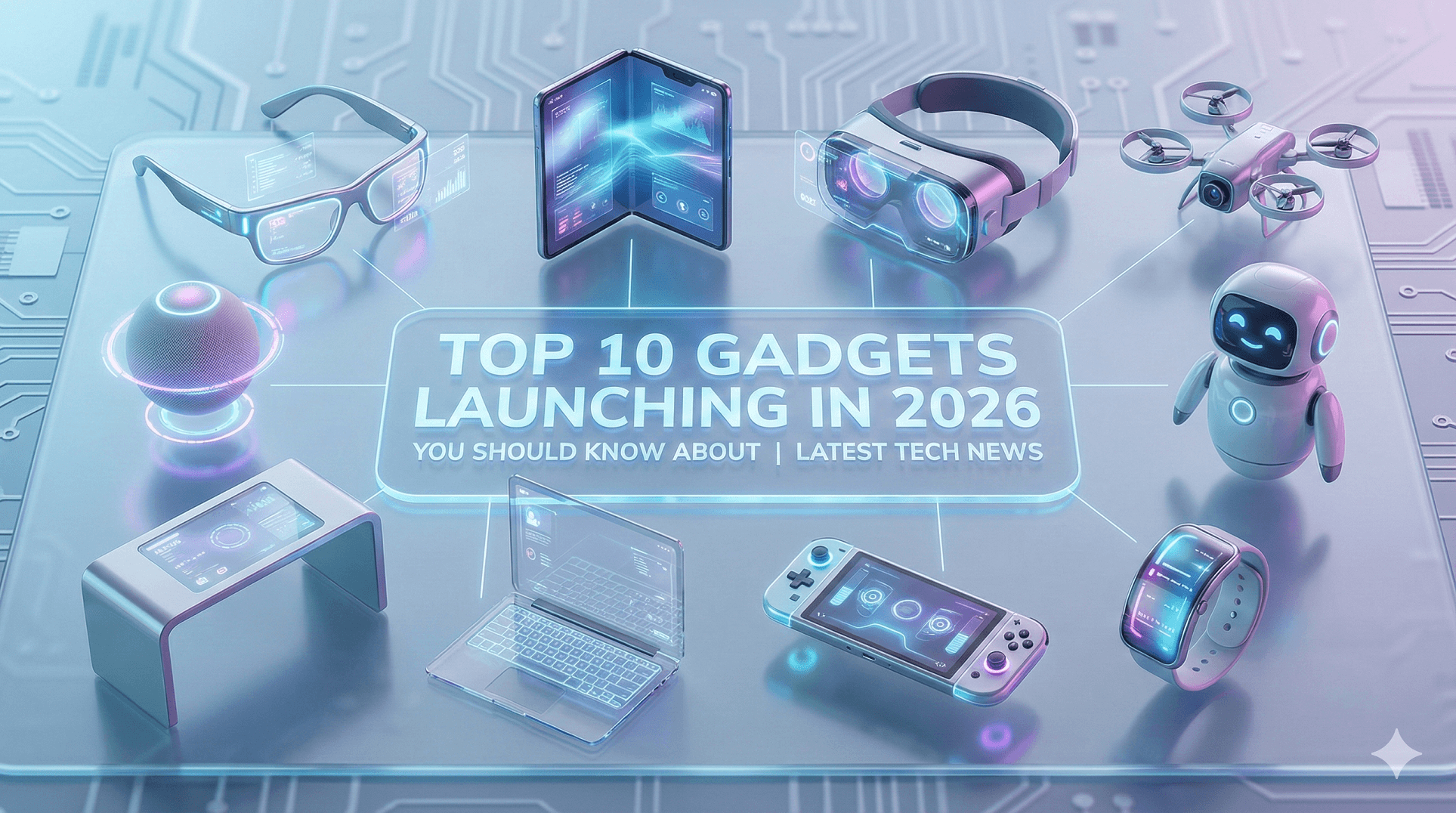
The Future Is Now: Top 10 Gadgets of 2026
The year 2026 is shaping up to be one of the most transformative periods in consumer technology. From AI-powered wearables to home robots and next-generation AR glasses, the top 10 gadgets of 2026 are not built for novelty — they are built to solve real problems. Whether you are a dedicated tech enthusiast or simply someone who wants smarter, more helpful tools in your daily life, these upcoming devices deserve your full attention. This guide breaks down each one, explains what makes it genuinely useful, and helps you understand why 2026 could be the year technology finally gets out of your way and starts working for you.
Related: Best Smart Home Devices to Buy in 2025
1. Next-Generation AR Glasses
Augmented reality glasses are making a serious and long-overdue leap forward in 2026. Unlike the bulky, awkward prototypes of previous years, the latest AR glasses are designed to look and feel like everyday eyewear. They display turn-by-turn navigation, calendar alerts, and subtle notifications directly in your field of view without overwhelming your senses or drawing unwanted attention.
The most significant improvement is comfort and discretion. Early demos have shown devices so lightweight that users report forgetting they are wearing them within minutes. For professionals, commuters, and anyone managing a packed schedule, this could become as indispensable as a smartphone. Both Google and Apple are rumored to have major releases in this space, with the Apple Vision Air being one of the most anticipated devices of the year. Independent analysts at Statista project the AR glasses market to grow significantly through 2026 and beyond.
2. Smarter Home Assistants and Automation
The smart home space has moved well beyond simple voice commands. The latest home automation 2026 devices are context-aware and deeply integrated into daily life. They learn your routines, monitor your environment, and make quiet adjustments without waiting to be asked.
Picture walking into your bedroom after a long day to find the lights already dimmed, the temperature perfectly set, and soft audio beginning to play — all triggered by your routine. Step into the kitchen and a connected display walks you through a recipe, hands-free and step by step. The Tesla HomeBot is generating significant buzz in this category, promising a seamless blend of artificial intelligence and home management. These devices do not just respond to you. They learn to anticipate you.
3. Rollable Screens and Foldable Phones
Foldable phones in 2026 are entering a much more mature and reliable phase. After years of early-adopter prototypes plagued by durability concerns, manufacturers have refined the technology substantially. The Samsung FlexBook 2026 is a standout example, functioning as a compact phone that expands into a full tablet-sized display in seconds.
Rollable screens push this concept even further. Select upcoming models allow the display to extend outward like a scroll, providing extra screen real estate without the bulk of a larger device. This directly addresses one of the most persistent frustrations in mobile technology: people want large displays but refuse to carry large phones. In 2026, that trade-off may finally be resolved for good.
Related: Samsung Foldable Phone Comparison Guide
4. Advanced Health Wearables
Health tech in 2026 is moving far beyond step counting. The new generation of health wearables tracks hydration levels, cortisol and stress indicators, sleep cycle quality, blood oxygen trends, and early warning signs of potential health conditions. These are genuine preventive health tools, not just fitness accessories.
One powerful use case is sleep monitoring. Newer wearable tech 2026 devices can detect irregular cardiac patterns during sleep and flag them for medical follow-up, potentially catching a serious issue before symptoms appear. According to the World Health Organization, early detection of cardiovascular irregularities dramatically improves health outcomes. This is where consumer technology stops being a gadget and starts being genuinely life-changing.
5. Home Robot Helpers
Home robots in 2026 are not the humanoid machines of science fiction. They are compact, practical, and laser-focused on specific helpful tasks. Devices like the Tesla HomeBot can remind users to take medication, retrieve small objects from other rooms, check whether appliances were left on, and assist elderly family members with simple but important daily needs.
Pricing is also becoming far more accessible. What was once a luxury product reserved for technology enthusiasts is gradually entering a price range that works for average households and families caring for aging relatives. This makes home robots one of the most socially meaningful categories among all future gadgets of 2026.
6. Pocket Projectors
Portable projectors have existed for years, but the 2026 models represent a genuine generational leap. They are smaller, significantly brighter, and far smarter than their predecessors. Point one at a blank wall and you have a crisp, large-screen viewing experience without needing a television or dedicated display.
For travelers, remote workers, and people living in compact spaces, a pocket projector fundamentally changes how entertainment and presentations are delivered. Brightness and battery life — historically the two biggest weaknesses of portable projectors — have both improved substantially. Wireless pairing with phones and laptops makes setup nearly effortless.
7. Portable Gaming Consoles
Gaming consoles in 2026 are pushing the boundaries of portable play to new heights. The Nintendo Switch X is expected to deliver near console-quality graphics, a substantially longer battery life, and significantly smoother performance in a handheld form factor. The audience for portable gaming has expanded well beyond younger players to include adults using gaming as a legitimate tool for stress relief and social connection.
Cloud gaming integration is another defining feature of this generation. Rather than relying entirely on local hardware, the new portable consoles can stream high-quality titles directly, reducing massive storage requirements while maintaining strong performance. It is a smart and practical evolution for the entire category.
Related: Nintendo Switch X vs Steam Deck — Which Should You Buy?
8. Smart Fitness Gear
Home fitness equipment is getting smarter and more space-efficient. The 2026 trend moves decisively away from bulky, expensive machines toward intelligent, compact tools. AI-powered resistance bands, slim foldable treadmill pads, and posture-correction wearables are among the most interesting upcoming releases in this category.
These tools track your form in real time, adjust resistance automatically, and deliver actionable feedback through connected apps. They help people stay consistent with fitness goals without requiring a dedicated gym space or a rigid schedule. For busy individuals, smart devices in 2026 aimed at fitness offer genuinely practical, low-friction ways to stay active at home.
9. Eco-Friendly Tech Gadgets
Sustainability is no longer a marketing afterthought — it is becoming a core design priority. Several 2026 gadgets are built with integrated solar charging panels, biodegradable casings, and energy-efficient processors that reduce power consumption without sacrificing performance.
This shift reflects a real and growing change in consumer expectations. Buyers increasingly want products that perform well and align with their environmental values. Companies that dismiss this trend are losing ground to those that take it seriously. In 2026, choosing eco-friendly tech no longer means accepting any compromise in quality or capability. Learn more about sustainable electronics at Wikipedia: Sustainable Electronics.
10. Personal AI Companions
AI gadgets in 2026 are evolving into something far more personal and genuinely useful than earlier voice assistants ever managed to be. The new generation of personal AI tools learns your communication style, remembers your preferences, tracks your recurring tasks, and adapts its responses over time. Products like Google AI devices and the Meta VR Hub ecosystem are integrating these capabilities directly into everyday hardware.
These AI companions are especially valuable for people who struggle with organization, time management, or cognitive overload. Rather than adding another demanding app to juggle, a well-designed personal AI works quietly in the background — reducing mental load and making small but meaningful improvements to your day, every single day.
Conclusion
The top 10 gadgets of 2026 share one defining quality: they are built around genuine human needs rather than technical showmanship. From AR glasses that feel invisible to health wearables that could genuinely save lives, from smarter home systems to personal AI tools that truly learn — these devices represent a meaningful shift in how technology fits into daily life. The best gadgets of 2026 will not demand your attention. They will quietly earn their place in your routine by being useful, reliable, and respectful of your time. Stay ahead of the curve — bookmark Technologia and follow our coverage as these devices launch throughout the year.
Related: How to Future-Proof Your Tech Setup in 2026
Frequently Asked Questions
What are the most anticipated gadgets coming in 2026?
Some of the most highly anticipated new gadgets of 2026 include the Apple Vision Air AR glasses, the Samsung FlexBook 2026 foldable device, the Tesla HomeBot home robot, the Nintendo Switch X portable gaming console, and the next generation of advanced health wearables. Each of these devices represents a significant technological leap over its predecessor and is expected to have a measurable impact on how people live, work, and stay healthy. Collectively, they point to a 2026 landscape where technology is smarter, more personal, and more deeply integrated into everyday life than ever before.
Are AR glasses in 2026 actually practical for everyday use?
Yes — and that is precisely what makes the 2026 generation of AR glasses different from everything that came before. Earlier models were bulky, drew unwanted attention, and offered limited real-world utility. The latest designs look like standard prescription or fashion eyewear, display information subtly and only when contextually relevant, and are lightweight enough for all-day wear. Early demos from both Google and Apple suggest that transitioning from traditional glasses to smart AR eyewear will feel natural rather than disruptive. For commuters, professionals, and anyone who manages a busy schedule, these devices have genuine everyday value.
How are health wearables in 2026 different from current fitness trackers?
Current fitness trackers primarily measure steps, heart rate, and basic sleep data. Health tech 2026 wearables go significantly further by continuously tracking hydration levels, stress hormones like cortisol, blood oxygen trends, sleep cycle quality, and early indicators of potential health conditions. Some devices can detect irregular cardiac patterns during sleep and prompt users to seek medical attention before symptoms become serious. This positions them as tools for preventive health management rather than simple activity monitors — a distinction that could have a profound impact on long-term health outcomes for millions of users.
Will home robots in 2026 be affordable for average households?
Home robots are becoming increasingly accessible as the underlying technology matures and production scales. While premium models will still carry higher price tags, several future gadgets in the home robotics category are expected to reach price points accessible to middle-income households in 2026. Devices focused on specific helpful tasks — such as medication reminders, fetching small items, or checking on appliances — are being specifically designed and marketed for older adults and busy families as practical everyday tools rather than luxury items. This democratization of home robotics is one of the most socially significant trends in technology this year.
What makes personal AI companions in 2026 different from older voice assistants?
Older voice assistants responded to direct commands but had very limited ability to learn, adapt, or anticipate user needs. The new generation of AI gadgets 2026 personal companions actively learns your habits, communication preferences, and recurring needs over time. Rather than waiting to be asked, they can proactively surface reminders, suggestions, and information based on established patterns. They also integrate more deeply across devices and services, creating a connected and cohesive experience that feels genuinely helpful rather than merely reactive. The result is an assistant that meaningfully reduces daily mental load instead of adding another thing to manage.
