
Mental Health Apps That Actually Work (2025 Edition) | Tools List
Let’s be honest. The world of mental health apps can feel overwhelming. A quick search in your app store reveals thousands of options, all promising peace, calm, and happiness. But which ones actually deliver? Which tools are backed by science and designed by experts, not just well-meaning developers? Finding the right mental health app that fits your life and genuinely helps can be a game-changer. We’ve sifted through the noise to bring you a curated list of standout apps for 2025, focusing on those with proven methodologies, user-friendly designs, and tangible benefits.
Beyond the Hype: What Makes a Mental Health App “Work”?
Before we dive into the list, it’s crucial to set some expectations. An app isn’t a replacement for professional therapy, especially for severe mental health conditions. Think of these tools as part of your mental fitness toolkit—like a gym membership for your mind. They can help you build resilience, manage daily stress, and develop healthier thinking patterns.
A truly effective app usually has a few key characteristics:
- Evidence-Based Foundation: It uses techniques from established therapeutic practices like Cognitive Behavioral Therapy (CBT), Acceptance and Commitment Therapy (ACT), or mindfulness-based stress reduction (MBSR).
- Engaging and User-Friendly: If it’s a chore to use, you won’t stick with it. The best apps have intuitive interfaces that feel supportive, not frustrating.
- Privacy and Security: Your mental health data is incredibly sensitive. Top-tier apps are transparent about their data policies and use strong encryption.
Your Digital Toolkit: Top-Tier Apps for 2025
Here’s a breakdown of apps across different categories that are making a real impact this year.
1. For the Overthinker: CBT Companion
If your mind tends to get stuck in loops of “what ifs” and worst-case scenarios, Cognitive Behavioral Therapy (CBT) might be your answer. CBT is all about identifying the connection between your thoughts, feelings, and behaviors.
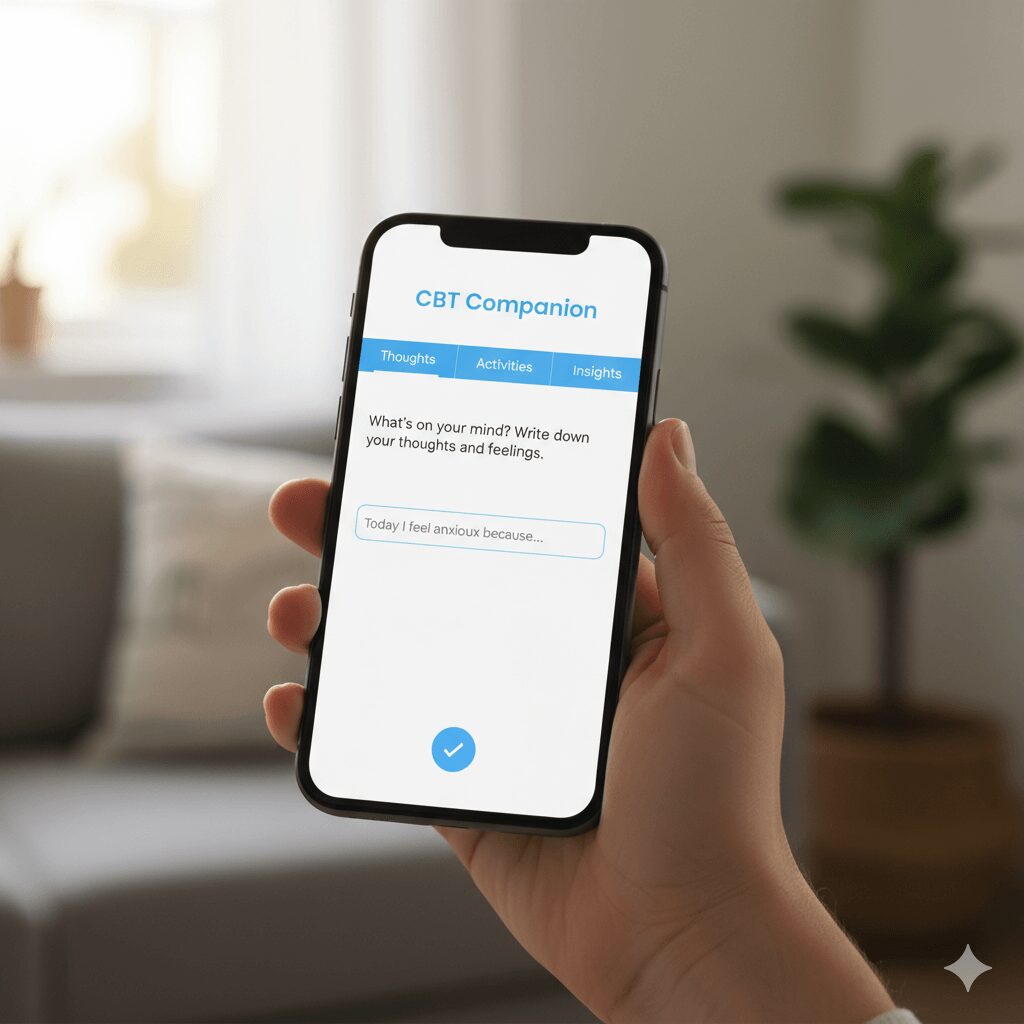
The App: CBT Companion
This app is like having a pocket-sized therapist guiding you through the core principles of CBT. It’s brilliantly simple and action-oriented.
- How It Works: You use its digital journal to log negative thoughts. The app then walks you through the process of challenging those thoughts, identifying cognitive distortions (like “catastrophizing” or “black-and-white thinking”), and reframing them into more balanced perspectives.
- Why It Works in 2025: It has evolved with guided video exercises and audio sessions that make abstract CBT concepts feel practical and accessible. It’s less about reading and more about doing.
- Perfect For: Anyone dealing with anxiety, depression, or persistent negative self-talk.
- Real-Life Scenario: You’re about to give a presentation and think, “I’m going to mess this up completely.” Instead of spiraling, you open the app, log the thought, and are guided to a more realistic one: “I’m prepared, and it’s normal to be nervous. I can handle this.”
2. For Cultivating Calm: Headspace
Mindfulness is no longer a niche concept; it’s a mainstream tool for managing stress and improving focus. Headspace has been a leader in this space for years, and for good reason.
The App: Headspace
Headspace makes meditation approachable for everyone. With its friendly animations and the calming voice of co-founder Andy Puddicombe, it demystifies the practice.
- How It Works: It offers hundreds of guided meditations on everything from managing anxiety and improving sleep to focusing at work. It also features “mini-meditations” for when you only have a few minutes, and themed “courses” for deeper dives.
- Why It Works in 2025: The app has expanded far beyond simple sitting meditations. It now includes “Move Mode” for mindful movement, SOS sessions for moments of acute panic, and even focus-enhancing music.
- Perfect For: Beginners to mindfulness and anyone looking to build a consistent, gentle meditation habit.
- Tip: Try the “Pro” level sessions once you’re comfortable with the basics. They offer less guidance, helping you build the skill of meditating independently.
3. For Navigating Big Feelings: Sanvello
Sometimes, you need more than just meditation; you need a comprehensive system for understanding your moods and building coping skills. Sanvello does exactly that.
The App: Sanvello
Clinically developed and often covered by health insurance plans, Sanvello is a powerful ally. It’s based on CBT and ACT principles and feels like a supportive, all-in-one community.
- How It Works: The app is structured around four core areas:
- Mood Tracking: Daily check-ins to chart your emotional landscape.
- Guided Journeys: Step-by-step courses for challenges like social anxiety or grief.
- Tools: An in-the-moment toolkit with techniques for calming, grounding, and reframing.
- Community: A peer-supported community (anonymously) to share and learn from others’ experiences.
- Why It Works in 2025: Its strength is in integration. By linking your mood, your learning, and your tools, it provides a holistic view of your mental health journey. You can also connect with licensed therapists through the app if you need a higher level of care.
- Perfect For: Those who want a structured, clinical-grade tool that also offers a sense of connection.
4. For Better Sleep: Calm
The link between mental health and sleep is undeniable. Poor sleep worsens anxiety and mood, and poor mental health makes sleep elusive. Breaking this cycle is essential.
The App: Calm
While Calm also offers meditation, its sleep content is arguably its crown jewel. It has become synonymous with winding down and getting a good night’s rest.
- How It Works: Calm’s flagship feature is its library of “Sleep Stories”—bedtime stories for adults, narrated by celebrities with soothing voices (think Matthew McConaughey). It also features soundscapes, music specifically composed for sleep, and guided sleep meditations.
- Why It Works in 2025: The sheer variety and high production value keep users engaged. There’s always a new story or soundscape to try, preventing boredom and making your bedtime routine something to look forward to.
- Perfect For: Anyone who struggles with a racing mind at night, has trouble falling asleep, or simply wants to improve their sleep quality.
Choosing Your Digital Ally: A Quick Guide
With so many great options, how do you pick? Ask yourself these questions:
- What’s my primary goal? Is it sleep, anxiety, mood tracking, or general mindfulness? Let your goal guide your choice.
- What’s my learning style? Do I prefer reading, listening, or interactive exercises?
- What’s my budget? Many apps offer robust free versions, while premium subscriptions unlock deeper content. It’s okay to start free and upgrade later.
- Does it feel good to use? Download a couple and try their free content. The right app should feel supportive, not like another item on your to-do list. If one doesn’t click, try another.
A Final, Important Note
These apps are powerful tools for self-care and building mental fitness. However, if you are experiencing symptoms that significantly interfere with your daily life, please consider reaching out to a licensed mental health professional. Apps are fantastic for support, but they are not a substitute for professional diagnosis and treatment. You can find a qualified therapist through directories like Psychology Today.
Conclusion: Your Journey, Your Tools
The journey to better mental health is deeply personal, and the digital tools we choose should reflect that. The best mental health app for you is the one you’ll actually use—the one that feels less like a chore and more like a compassionate companion. Whether you need help quieting your inner critic with CBT Companion, finding a moment of peace with Headspace, understanding your patterns with Sanvello, or finally getting a good night’s rest with Calm, the power to take that first step is in your pocket. In 2025, the support you need might just be a tap away.
