
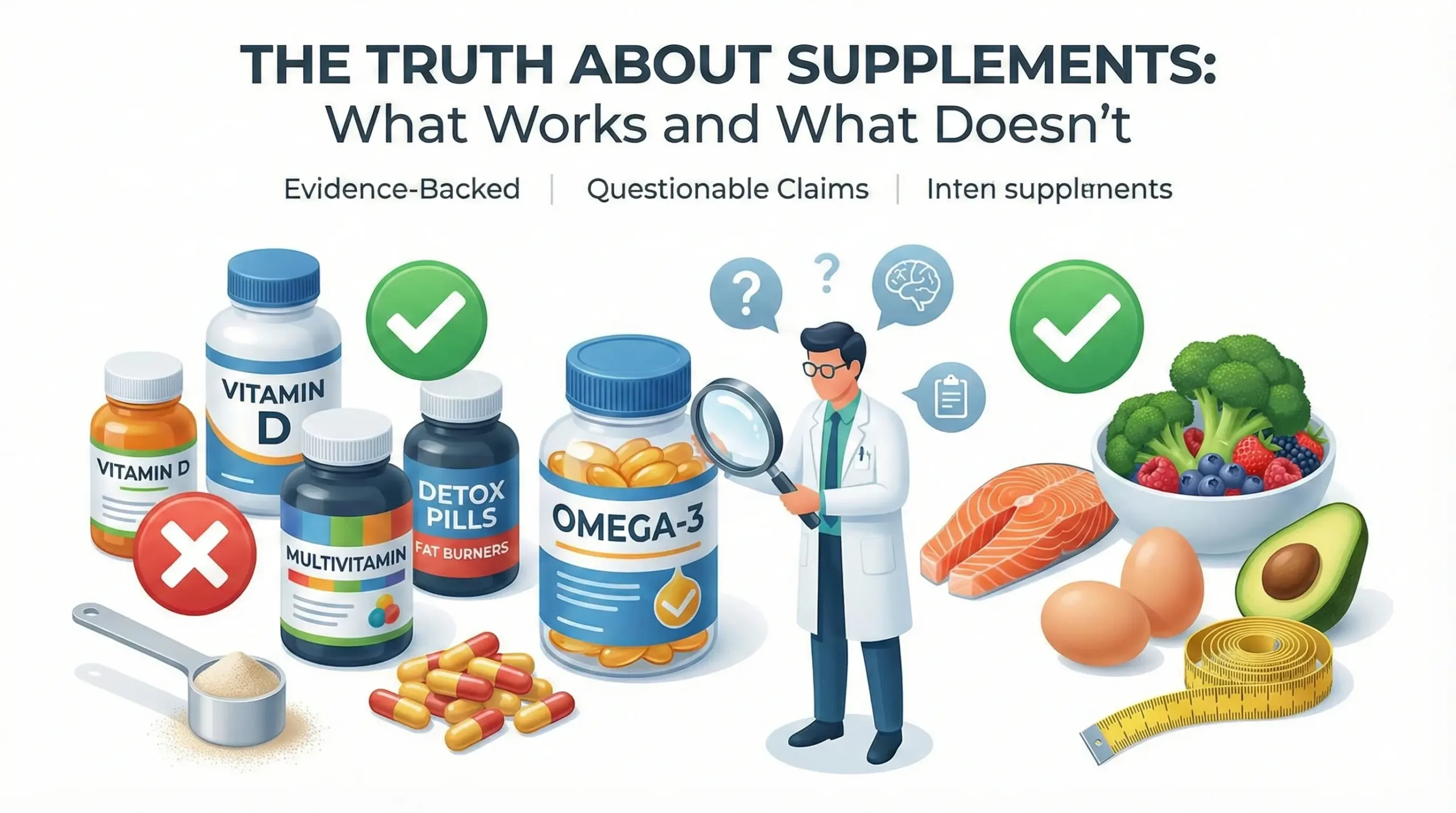
The supplement world feels crowded and confusing, and almost everyone has experienced that moment where you’re staring at shelves full of bottles wondering which ones actually matter. With so many promises about boosting your energy, improving sleep, sharpening your mind, or melting fat, it’s easy to assume you need all of them. But the real truth is much simpler: some supplements genuinely work, some work only in the right situations, and many don’t live up to their hype at all. When you start looking at the facts instead of the marketing, the whole picture becomes clearer and far less overwhelming.
A lot of people turn to supplements because they want instant results. They want to fix fatigue, low mood, weak immunity, or slow progress in the gym. And while supplements can help in some cases, they’re not miracle cures. They only work well when your body is missing something or when your lifestyle is already reasonably balanced. Vitamin D is a perfect example of a supplement that actually works.

People who spend most of their time indoors or live in places with limited sun exposure often end up deficient without realizing it. Low vitamin D can cause tiredness, muscle weakness, and even low mood. Once levels are corrected, many people feel a clear, steady improvement over the next few weeks. It’s not magic; it’s simply restoring what the body needed.
Another supplement with strong, consistent research behind it is omega-3. Because modern diets are often low in healthy fats from fish, omega-3 can help reduce inflammation and support heart health. I once knew someone who worked long hours at a computer and rarely ate proper meals. He started taking omega-3 after his doctor recommended it, and within a couple of months he felt less mentally foggy and slightly more energetic. The change wasn’t dramatic, but it was noticeable enough that he stuck with it. That’s exactly how real supplements work—they help gradually, not dramatically.
Creatine is another supplement with solid evidence, especially for people who exercise. It supports strength, recovery, and overall workout performance. Even beginners can benefit, not just athletes. Someone who lifts weights just three times a week may still feel the difference in endurance and recovery after taking creatine consistently. It doesn’t cause a sudden surge of power like some pre-workout drinks. Instead, it slowly builds up in your muscles and improves performance over time. The science behind it is very strong, and it’s one of the rare supplements that actually does what it claims.
On the other side of the industry, however, are supplements that sound exciting but don’t do much at all. Fat burner pills are one of the biggest examples. They’re marketed as if they can melt fat off your body, but most of them rely on heavy stimulants like caffeine. They make your heart beat faster, reduce appetite for a few hours, and create the illusion of progress. But once the effect wears off, the reality becomes obvious: without lifestyle changes, these pills don’t lead to real fat loss. I once met a guy at the gym who kept switching fat burners every month, believing each new formula was “stronger.” After almost a year, he realized he had lost more money than weight.
Detox teas and detox powders are another misleading category. The idea of “cleaning toxins out of your body” sounds attractive, but the human body already has a powerful detox system built in. The liver, kidneys, lungs, and skin work nonstop without needing help from expensive powders. Detox products mostly cause temporary digestive changes that trick people into thinking something serious is happening. Proper hydration, sleep, and a balanced diet do far more for detox than any tea can offer.
Collagen supplements fall somewhere in the middle. Some people feel improvements in joint comfort or skin hydration, while others feel nothing at all. The research is mixed, and results vary widely. It’s not completely useless, but it’s far from guaranteed. It’s one of those supplements where your personal experience may matter more than the marketing claims.
A real-life example that shows how confusing supplements can be happened with a friend of mine who chased every popular product on social media. Hair vitamins, metabolism boosters, gut cleansers—she bought them all. Yet none of them truly helped her feel better. Eventually, she got her blood levels checked, and the results were simple: she was low in iron and vitamin D. Once she took the supplements she actually needed, her energy returned, her skin improved, and even her focus felt sharper. She realized she didn’t need ten different products—she just needed the right ones.
Another example came from a fitness instructor who used to recommend supplement stacks to beginners. He thought it would motivate them. But after years of watching people train, he noticed a pattern. The clients who slept properly, ate simple balanced meals, stayed hydrated, and trained consistently improved far faster than those depending heavily on supplements. Today he only suggests creatine or protein powder when someone truly needs support.

He learned that consistency beats capsules every time.

Protein powder is a good example of a supplement that’s useful but not magical. It’s helpful for people who struggle to eat enough protein—busy workers, students, or anyone who doesn’t cook often. It supports muscle recovery, helps control appetite, and makes it easier to hit daily nutrition targets. But it’s still just food in powder form. It’s convenient, not powerful.
One thing people often overlook is that supplements are not tightly regulated in many countries. Some brands include weak doses, irrelevant ingredients, or exaggerated claims. Choosing reputable companies with transparent labels and third-party testing matters more than people realize.
The key to using supplements wisely is patience. Real, effective supplements don’t work overnight. Vitamin D takes weeks to improve levels. Omega-3 builds up gradually. Creatine needs consistent use before you feel the difference. People often quit early, thinking the product “doesn’t work,” when the real issue is unrealistic expectations.
If you want to use supplements the right way, start with the basics. Improve your sleep, water intake, meals, and activity level. Once those are in place, supplements become supportive tools rather than desperate solutions. And if you ever feel unsure, a simple blood test can tell you far more about what your body needs than any advertisement.
In the end, supplements aren’t miracles or scams—they’re just tools. Some genuinely help when used correctly. Some only help in specific situations. And some don’t do much at all. When you understand the difference between what works and what doesn’t, you avoid wasting money and you protect your health. More importantly, you realize that the real foundation of good health is your lifestyle, not a bottle on a shelf.
