
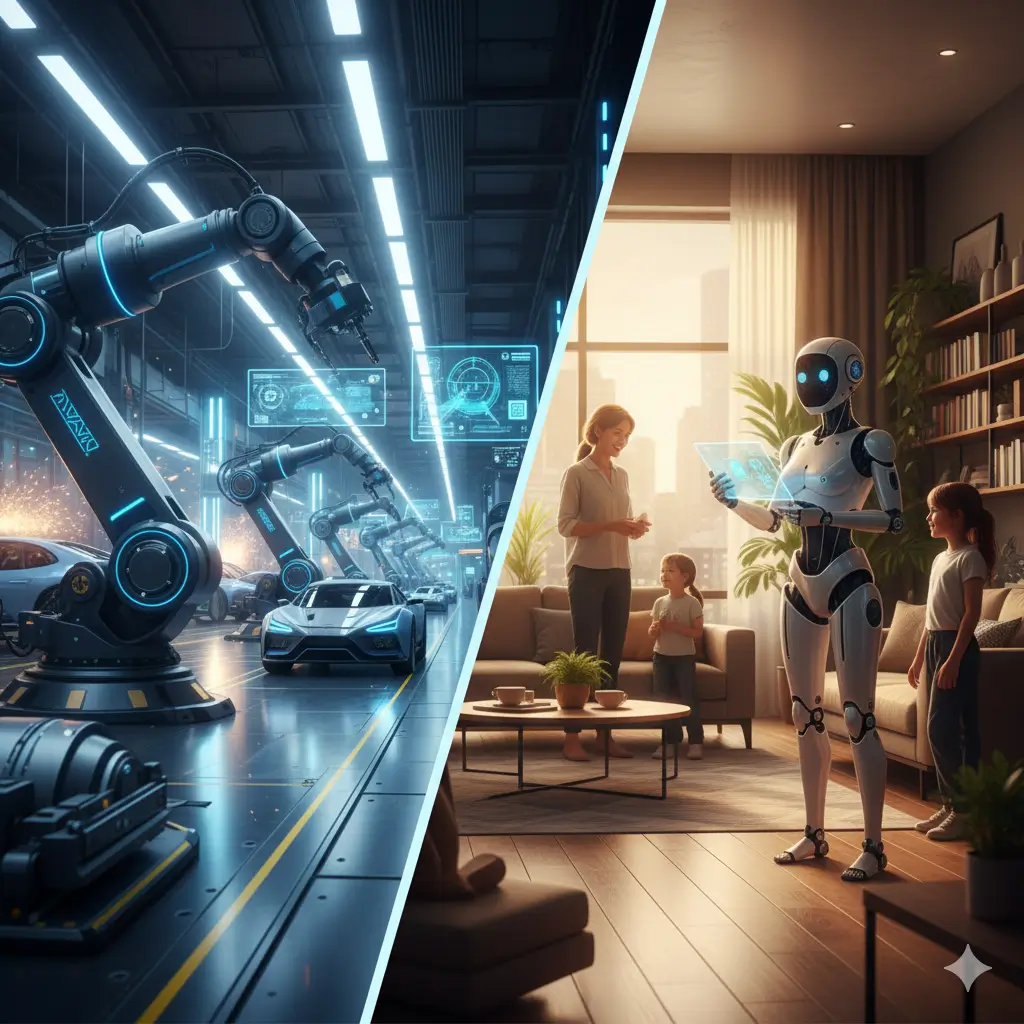
Introduction: A World Where Robots Are Becoming Everyday Companions
Not long ago, robots existed only in science fiction — sleek, intelligent machines that could walk, talk, and reason like humans. Today, that fiction is rapidly becoming reality. Robots have evolved from massive industrial arms bolted to factory floors into compact, intelligent systems operating in our homes, hospitals, schools, and city streets. The future of robotics is no longer a distant concept reserved for tech conferences — it is unfolding right now, reshaping how we live, work, and interact with the world around us. This article explores where robotics technology is headed, the industries it is transforming, and the important questions we must answer as humans and machines learn to coexist.
1. From Industrial Giants to Collaborative Robots
For decades, robotics meant one thing: large, powerful machines handling repetitive tasks on factory floors. These industrial robots excelled at welding, assembling, and packaging — but they operated in isolation, separated from humans by safety cages and strict protocols. That landscape is changing dramatically with the rise of collaborative robots, or cobots.
What Are Cobots and Why Do They Matter?
Cobots are robots engineered to work alongside humans rather than replace them. Equipped with advanced AI, force-sensing technology, and real-time vision systems, cobots can detect human presence and adjust their movements accordingly — making them safe enough to share a workspace without physical barriers. They are faster to program, easier to deploy, and far more flexible than traditional industrial robots.
At BMW factories, cobots assist workers in assembling precision components that require both strength and delicacy. These machines reduce repetitive strain injuries, minimize errors, and free human employees to focus on complex problem-solving and quality control. Across automotive, electronics, and food manufacturing sectors, cobots are becoming indispensable partners — not replacements — for the human workforce.
2. Robotics in the Home: The Smart Living Revolution
Modern homes are growing smarter every year, and robots are increasingly central to that transformation. What once seemed futuristic — a machine that cleans your floors, monitors your health, or prepares your meals — is now commercially available and rapidly improving. Home robotics represents one of the fastest-growing segments in the industry, driven by advances in artificial intelligence, computer vision, and natural language processing.
Popular Examples of Home Robots Today
- Robot Vacuums: Brands like iRobot Roomba and Xiaomi Mi Robot use AI-powered mapping to navigate floor plans, avoid obstacles, and clean efficiently — all without human input.
- Social Robots: Devices like Amazon Astro and ElliQ can recognize household members, answer questions, stream entertainment, and hold basic conversations, serving as interactive home assistants.
- Kitchen Assistants: The Moley Kitchen Robot uses articulated robotic arms to replicate professional cooking techniques — preparing meals from thousands of recipes and cleaning up afterward.
As AI and robotics continue to converge, home robots are evolving beyond simple task execution. Next-generation home robots will understand context, anticipate user preferences, adapt to daily routines, and even respond to emotional cues — turning them into genuinely personalized household companions.
3. Healthcare Robots: Precision, Compassion, and Life-Saving Innovation
Healthcare is one of the most promising and impactful frontiers for robotics. These machines are not merely supporting medical professionals — in many cases, they are enabling procedures and outcomes that would be impossible through human effort alone.
Types of Healthcare Robots Making a Difference
- Surgical Robots: The da Vinci Surgical System gives surgeons unprecedented precision during minimally invasive procedures, reducing recovery times, blood loss, and the risk of complications.
- Caregiver Robots: Japan’s Robear can safely lift and transfer patients, monitor vital signs, and provide social interaction for elderly individuals — addressing critical workforce shortages in elder care.
- Delivery Robots: Autonomous robots in hospitals transport medications, lab samples, and meals between departments, reducing human error and lowering the risk of cross-contamination.
- Disinfection Robots: During the COVID-19 pandemic, UV-C disinfection robots sterilized hospital rooms with a speed and thoroughness impossible for human cleaning staff, helping protect patients and healthcare workers alike.
With aging global populations and increasing pressure on healthcare systems, medical robotics will only grow in importance over the coming decade.
4. Educational Robots: Building the Minds of Tomorrow
Classrooms around the world are embracing robotics as a powerful educational tool. Rather than replacing teachers, robots are serving as interactive learning partners — making complex subjects more accessible, engaging, and fun for students of all ages.
Notable Educational Robots in Use Today
- NAO Robot: A programmable humanoid used in schools worldwide to teach coding, logical thinking, and even social interaction skills for children with autism.
- LEGO Mindstorms: A widely used robotics kit that introduces children to engineering and programming concepts through hands-on, play-based learning.
- Moxie: Designed specifically for children aged 5–10, Moxie supports emotional intelligence development, conversational skills, and confidence-building through guided daily interactions.
Educational robots also help bridge gaps for students in under-resourced communities by providing consistent, patient, and personalized instruction that supplements classroom teaching.
5. Service and Delivery Robots: Redefining Everyday Convenience
From sidewalk delivery bots to hotel service robots, automation is reshaping the service industry at a remarkable pace. Consumers are increasingly encountering robots in spaces that were once exclusively human territory.
- Last-Mile Delivery: Companies like Starship Technologies and Amazon Scout deploy autonomous ground robots to deliver groceries and parcels directly to customers’ doors — reducing delivery costs and carbon emissions.
- Hospitality Robots: Hotels like Aloft use robots to deliver room service, towels, and amenities, improving operational efficiency and offering guests a memorable, novel experience.
- Restaurant Automation: Robotic systems can now take orders via touchscreen, prepare food with consistent precision, and even serve dishes — enhancing quality control and reducing labor costs for restaurant operators.
6. Emotional Intelligence in Robotics: The Companionship Frontier
Perhaps the most profound shift in robotics is not mechanical — it is emotional. Engineers and AI researchers are now designing robots capable of recognizing and responding to human emotions, opening entirely new possibilities for companionship and mental wellness support.
Sony’s Aibo robotic dog can identify its owner’s face and mood, responding with behaviors that mimic genuine affection. SoftBank’s Pepper reads facial expressions and vocal tone to engage in empathetic, context-aware conversations. For elderly individuals, people living alone, or those with social anxiety, these robots can provide meaningful companionship and reduce feelings of isolation — a genuinely life-changing application of technology.
7. Future Trends: The Next Decade of Robotics Innovation
The coming decade will see robotics capabilities expand in ways that seem almost extraordinary today. Several key trends are poised to define the next generation of robotic technology.
Key Robotics Trends to Watch
- AI-Driven Autonomy: Robots that make real-time decisions in unpredictable, unstructured environments — moving beyond scripted tasks to genuine adaptive intelligence.
- Swarm Robotics: Coordinated groups of smaller robots working collectively, with applications in precision agriculture, disaster search-and-rescue, and large-scale warehouse logistics.
- Soft Robotics: Robots built from flexible, biocompatible materials that mimic human musculature — ideal for delicate medical procedures and human-safe interaction.
- Personalized Robots: Systems that learn individual user habits, preferences, and schedules over time, delivering increasingly tailored assistance the longer they operate.
- Human-Robot Collaboration: Workflows designed from the ground up to distribute tasks intelligently between humans and robots — maximizing the strengths of both.
8. Challenges and Ethical Considerations
The rapid advancement of robotics is not without significant challenges. Addressing these issues proactively will determine whether robotics becomes a broadly beneficial force or one that deepens existing inequalities.
- Job Displacement: Automation will inevitably change certain job categories. Governments, educators, and businesses must invest in workforce reskilling and transition support to ensure workers are not left behind.
- Data Privacy: Home and social robots equipped with cameras, microphones, and sensors collect enormous amounts of personal data. Strong regulatory frameworks and transparent data practices are essential.
- Over-Dependence: As robots take on more tasks, there is a risk of eroding human skills and social connections. Thoughtful design must ensure robots augment human capability rather than atrophy it.
- Equity of Access: Advanced robotics must not become a luxury available only to wealthy individuals and nations. Policies should promote broad, equitable access to robotics benefits.
Conclusion: The Age of Human-Robot Partnership
The future of robotics is not a story of machines overtaking humanity — it is a story of partnership. Robots are becoming our assistants, caregivers, coworkers, and companions, designed not to replace human potential but to expand it. As robotics technology matures, the most important work will not happen in engineering labs alone — it will happen in policy chambers, classrooms, and communities, as society collectively decides how to shape this relationship for the greatest possible good. From factory floors to living rooms, the age of human-robot harmony is already beginning. How we navigate it will define the decades ahead.
Frequently Asked Questions About the Future of Robotics
1. Will robots replace human workers entirely in the future?
It is unlikely that robots will replace human workers entirely, though they will significantly change the nature of work. Robots excel at repetitive, physically demanding, and highly precise tasks, but humans retain critical advantages in creativity, empathy, ethical judgment, and complex problem-solving. The more realistic future is a collaborative one — where robots handle routine tasks and humans focus on higher-order responsibilities. This shift will require ongoing investment in workforce education, reskilling programs, and policies that support workers through the transition.
2. Are home robots safe to use around children and elderly people?
Modern home robots are designed with multiple safety features, including obstacle detection, gentle force limits, and emergency stop mechanisms. Reputable brands undergo rigorous testing before bringing products to market. However, as with any technology, supervision is advisable — particularly around very young children. For elderly users, robots like ElliQ and Robear have been specifically engineered to be safe, intuitive, and non-threatening, with interfaces designed for users who may have limited technical experience.
3. How does AI make robots smarter and more useful?
Artificial intelligence is the engine behind modern robotics intelligence. Machine learning allows robots to improve their performance over time by analyzing data from past interactions. Computer vision enables robots to perceive and interpret their environment in real time. Natural language processing lets robots understand and respond to spoken or written human commands. Together, these AI capabilities allow robots to move beyond rigid, pre-programmed behavior and adapt dynamically to new situations, making them vastly more useful in complex, real-world environments.
4. What industries will benefit most from robotics in the next decade?
While robotics will touch virtually every sector, the industries expected to see the greatest transformation include healthcare (surgical assistance, elder care, and hospital logistics), manufacturing (through cobots and advanced automation), agriculture (precision farming and harvesting robots), logistics and delivery (last-mile autonomous delivery), and education (personalized learning companions). Emerging applications in construction, environmental monitoring, and disaster response are also gaining significant momentum.
5. How can society ensure that robotics development is ethical and equitable?
Ensuring ethical and equitable robotics development requires a multi-stakeholder approach. Governments must establish clear regulatory frameworks covering data privacy, safety standards, and liability. Technology companies must prioritize transparency in how their robots collect and use data. Educational institutions should prepare students for a future alongside robots. Civil society organizations can advocate for policies that ensure the economic benefits of automation are widely shared rather than concentrated among a small number of technology owners. Open dialogue between engineers, ethicists, policymakers, and the public is essential to getting this right.
