
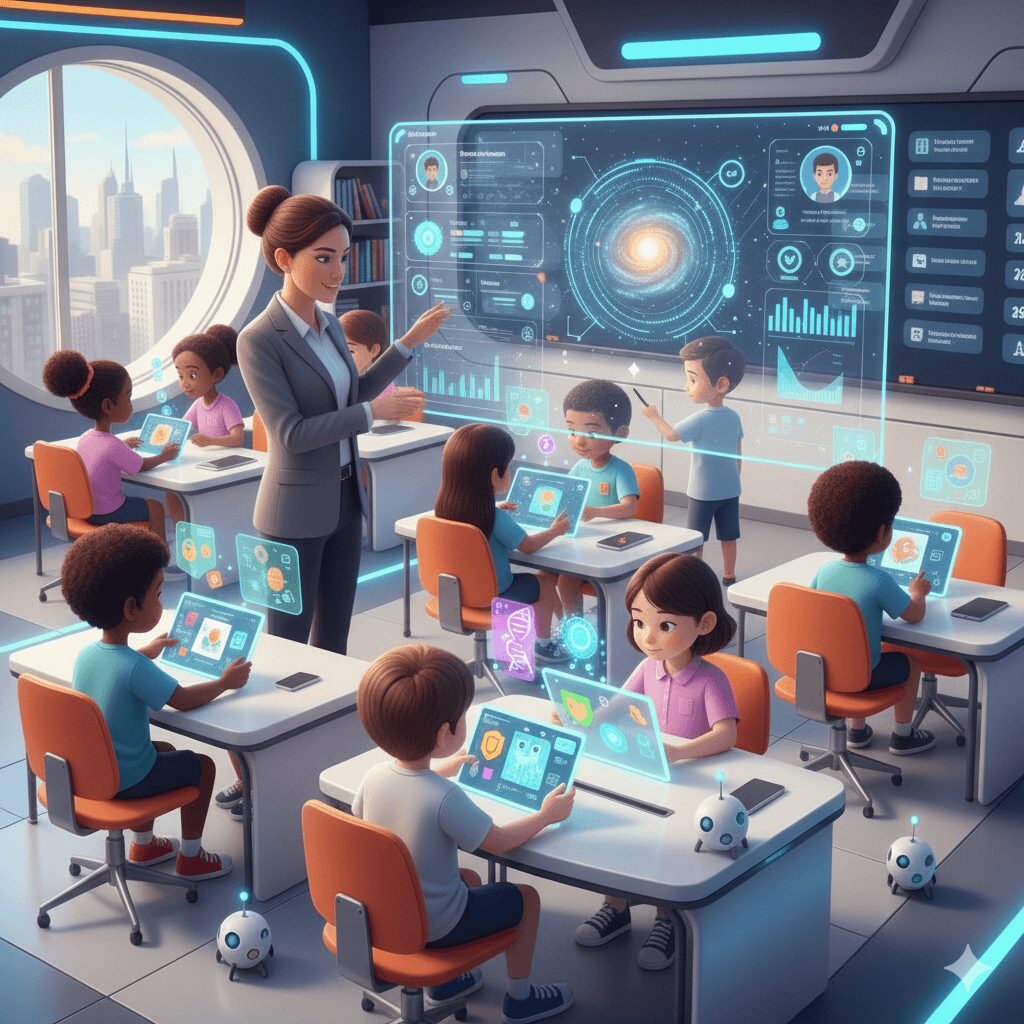
How AI in Education Is Reshaping the Modern Classroom
Artificial intelligence is no longer a distant promise for schools — it is already here, quietly transforming how students absorb knowledge and how teachers deliver it. AI in education is driving one of the most significant shifts in modern teaching, from personalized learning paths and instant feedback to smarter classroom management and inclusive edtech tools. This article explores seven powerful, practical ways AI is changing classrooms today, with real examples, honest context, and a clear-eyed look at both the opportunities and responsibilities these tools bring.
Related: The Best EdTech Tools for K-12 Classrooms in 2024
1. Personalized Learning That Adapts to Every Student
Every student learns differently. A classroom of thirty students might have thirty different learning speeds, styles, and areas of difficulty. Traditional teaching struggles to address this diversity at scale. AI-powered adaptive learning systems monitor how each student responds to content, identify knowledge gaps, and adjust difficulty levels in real time — without requiring the teacher to manually track every data point.
Consider a math teacher who introduced an AI-based learning app to a struggling class. Within weeks, students who previously avoided participation were keeping pace with lessons. One student who always sat quietly at the back began scoring significantly higher — simply because the AI tool broke concepts into smaller, more digestible steps. The teacher remained the guide; the AI removed the bottleneck between instruction and understanding. According to Education Week, schools using adaptive platforms report measurable gains in student engagement within the first semester.
2. Real-Time Feedback That Accelerates Progress
Traditional grading cycles mean students often wait days — sometimes weeks — to learn from their mistakes. By then, the lesson has moved on and the learning moment is lost. AI in education solves this with near-instant feedback. Students discover exactly what went wrong while the material is still fresh, tightening the learning loop and making corrections far more meaningful.
For teachers, automated grading tools handle repetitive assessment tasks — multiple choice tests, short-answer checks, vocabulary quizzes — freeing them to focus on deeper evaluation and richer student interaction. The result is a faster, more responsive learning environment for everyone in the room.
3. AI as a Practical Support System for Teachers
A common concern among educators is that AI might eventually replace them. The reality is far more practical. AI works best as a support layer — handling administrative tasks like attendance tracking, quiz generation, progress reporting, and scheduling — so teachers can invest more energy in what matters most: human connection, open discussion, and creative instruction.
One public school teacher who managed five classes daily described introducing an AI administrative assistant as gaining a silent co-teacher. The repetitive, draining parts of her workload were handled automatically. Within the first month, she had more time for one-on-one conversations with students and more energy to bring genuine enthusiasm into her lessons. That kind of impact is difficult to quantify but impossible to ignore.
Related: How Teachers Are Using AI Tools Without Losing the Human Touch
4. Inclusive Learning for Students With Special Needs
AI is making education more accessible for students who have historically been underserved by one-size-fits-all instruction. Students with dyslexia benefit from text-to-speech tools that read content aloud. Those with attention difficulties can use apps that break lessons into shorter, focused segments. Students with language barriers access real-time translation features that keep them in step with the rest of the class.
These are not minor conveniences — they are meaningful shifts in access and confidence. Inclusive edtech tools powered by AI help schools fulfill a responsibility that good education has always carried: reaching every student, not just those who fit the standard model. Research published by the Understood organization highlights how assistive AI technology is reducing participation gaps for students with learning differences across all grade levels.
5. Smarter Lesson Planning With AI Tools
AI lesson planning tools help teachers design more effective, curriculum-aligned lessons in less time. By analyzing student performance data, these tools suggest which topics need reinforcement, which students are ready to advance, and how to structure upcoming lessons for maximum impact. Teachers no longer rely solely on intuition or manual data review — they have intelligent, data-backed guidance at their fingertips.
This does not diminish the creative judgment of a skilled teacher — it sharpens it. When a teacher already knows which concepts three students are struggling with, they can design a targeted small-group session instead of re-teaching the entire class. That precision saves time and improves outcomes across the board.
Key Benefits of AI Lesson Planning
- Automatic identification of student knowledge gaps
- Curriculum-aligned content suggestions based on learning objectives
- Time-saving templates that reduce lesson prep from hours to minutes
- Data-driven pacing recommendations for individual and group progress
6. Encouraging Creativity Through AI-Powered Experiences
There is a misconception that AI limits creativity. In practice, well-designed AI tools can do the opposite. Students explore virtual science labs without fear of failure, experiment with AI-assisted writing prompts, build interactive stories, and use brainstorming tools that help them develop ideas they might never have reached alone. When the fear of judgment disappears, creative thinking expands.
Digital classrooms equipped with these tools give students a safe space to take intellectual risks. A student who hesitates to speak in class may be far more willing to explore an idea through an interactive app. That engagement, once sparked, often carries back into the physical classroom and broader academic life.
Related: Virtual Learning Tools That Boost Student Creativity
7. Preparing Students for a Technology-Driven Future
Beyond academic performance, exposure to AI tools in school helps students build the digital literacy skills they will need throughout their lives and careers. Learning to use technology responsibly, think critically about AI-generated content, and understand the role of automation in society are all competencies that belong in modern education. Schools that integrate AI thoughtfully are not just improving today’s lessons — they are equipping students for tomorrow’s world.
This also means teaching students what AI cannot do. Critical thinking, empathy, ethical reasoning, and creative problem-solving remain deeply human skills. AI in education should sharpen those capacities — not replace the habits of mind that independent thinking requires. For a broader look at AI’s societal role, the Wikipedia overview of AI in education provides useful historical and global context.
Balancing AI With Human Judgment
For all its benefits, AI in education comes with real responsibilities. Teachers must guide students in using these tools ethically and thoughtfully. The temptation to rely on AI for instant answers without genuine understanding is real, and schools need to build digital responsibility into their curricula alongside the tools themselves. Academic honesty policies, critical thinking exercises, and open conversations about how AI works are all essential components of responsible implementation.
AI should function as a guide that makes learning more effective — not a shortcut that bypasses thinking entirely. The goal is deeper understanding, not faster completion.
The Future of AI in Education
As AI technology continues to evolve, classrooms will become progressively smarter and more responsive. Teachers will use AI to analyze longitudinal student data, personalize entire curricula, and identify early signs of learning difficulties before they become serious problems. Students will move through material at their own pace, supported by tools that genuinely adapt to them — rather than expecting them to conform to a fixed system.
The future of AI in education is not about machines replacing teachers. It is about giving every student equal access to high-quality, personalized learning, and giving every teacher the freedom to focus on inspiration, motivation, and human connection — the things no algorithm will ever replicate. If you are an educator, administrator, or parent curious about how AI tools might work in your school, now is the time to explore, ask questions, and take that first step toward smarter learning.
Related: How Schools Are Preparing Students for an AI-Powered World
Frequently Asked Questions About AI in Education
Will AI replace teachers in schools?
No. AI is designed to support teachers, not replace them. Administrative tasks like attendance tracking, quiz generation, and basic grading can be automated, freeing teachers to focus on mentoring, discussion, emotional support, and creative instruction. Human connection remains at the core of effective teaching — something AI simply cannot replicate. Most educators who use AI tools report feeling more capable and less overwhelmed, not threatened by the technology.
How does adaptive learning actually work?
Adaptive learning systems use machine learning algorithms to track how a student interacts with content. They monitor which questions a student answers correctly or incorrectly, how long they take to respond, and which concepts they revisit most often. Based on this data, the system adjusts the difficulty, format, and sequence of content in real time to match each student’s current level. Over time, it builds a personalized learning path that responds to ongoing progress and addresses specific gaps before they widen.
Is AI in education safe for children?
When implemented responsibly, yes. Reputable edtech platforms are designed with student data privacy as a priority and comply with regulations such as COPPA in the United States and GDPR in Europe. Schools should carefully vet any AI tools they adopt, ensure student data is stored securely, and maintain clear policies about how that information is used. Parental transparency and institutional oversight are key components of safe, ethical AI integration in any school environment.
Can AI help students with learning disabilities?
Absolutely. AI-powered tools are among the most impactful developments in inclusive education. Text-to-speech software assists students with dyslexia. Apps that segment content into shorter bursts help students with attention difficulties stay focused and retain more. Real-time translation tools support students learning in a second language. These tools do not just improve academic performance — they improve confidence and sense of belonging, which are equally important for long-term student success.
How can schools start implementing AI without overwhelming teachers?
The most effective approach is gradual and collaborative. Schools should begin with one or two tools that address a specific, felt pain point — such as automated grading or a personalized practice app — and provide proper training before expanding further. Teachers should be actively involved in selecting and evaluating tools, not simply handed technology and told to use it. Pilot programs, peer-sharing sessions, and consistent support from school leadership all help create an environment where AI adoption feels manageable and genuinely beneficial rather than disruptive.
