
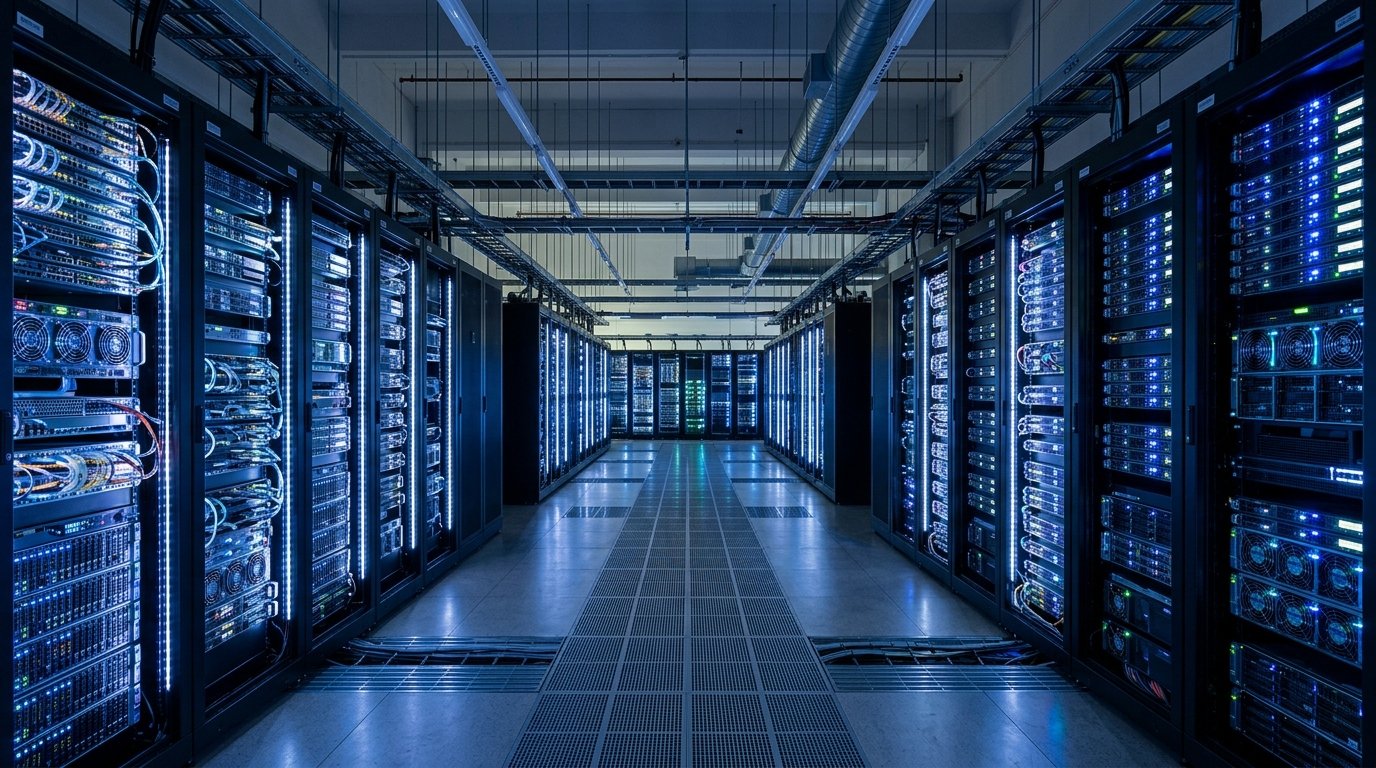
SpaceX reported its financial results for the third quarter of 2026 on Tuesday, October 20, 2026, delivering major beats across both revenue and net income. While the company built its reputation on orbital rocket launches, its cloud compute infrastructure and satellite internet divisions drove the bulk of its quarterly performance. Here is a clear breakdown of the numbers, where the company is spending its capital, and what these results mean for everyday consumers and tech investors.
SpaceX Q3 2026 earnings: The headline numbers
SpaceX trades on the Nasdaq under the ticker SPCX following its initial public offering in June 2026. This release marked the company’s second quarterly earnings report as a public defense, space, and technology conglomerate. According to reports compiled by InvestingLive, SpaceX beat Wall Street consensus targets across all three of its primary operating units.

Total quarterly revenue reached $14.58 billion (roughly $14.6 billion), representing a 161% jump year-over-year. That comfortably surpassed analyst expectations, which had projected revenue between $12.72 billion and $12.9 billion. Adjusted earnings per share came in at $0.35, more than double the consensus target of $0.13 to $0.15, as highlighted in data from Financial Modeling Prep.
The company posted approximately $4.4 billion in net income for the quarter. That figure topped Wall Street projections of roughly $1.9 billion and marked a sharp turnaround from the $541 million net loss reported in the second quarter of 2026. Following the earnings release and the investor webcast at 4:30 PM Eastern Time on October 20, shares rose 1.22% in after-hours trading, gaining $1.81 to reach $149.60.
| Financial Metric | Wall Street Consensus | Q3 2026 Actual |
|---|---|---|
| Total Revenue | $12.72B – $12.90B | $14.58 billion |
| Adjusted EPS | $0.13 – $0.15 | $0.35 |
| Net Income | ~$1.9 billion | ~$4.4 billion |
| AI Segment Revenue | $6.30 billion | $7.56 billion |
| Starlink Connectivity Revenue | $4.90 billion | ~$5.30 billion |
| Space Launch Revenue | $1.40 billion | ~$1.80 billion |
My look at SpaceX's investments
SpaceX has invested across many fields. Most recently, they have invested heavily in AI.
How AI compute became SpaceX’s largest revenue engine
The biggest driver of the quarter was SpaceX’s artificial intelligence infrastructure business. AI division revenue reached $7.56 billion, reflecting an 830% increase year-over-year and beating analyst estimates of $6.3 billion. That total makes AI infrastructure the company’s single largest standalone revenue unit, surpassing both satellite connectivity and rocket operations.
The AI compute division also proved profitable during the quarter, generating $431 million in operating income. That reversed an operating loss of $1.7 billion recorded by the division during the same period in the prior year. SpaceX operates high-density data centers and power infrastructure, reaching 1.7 gigawatts of nameplate compute capacity as of September 30, 2026.
Rather than relying solely on proprietary software, SpaceX rents out this high-capacity data center footprint and dedicated power to external AI research labs and tech companies, including Anthropic and Google. At the same time, the infrastructure supports development for internal systems such as xAI’s Grok assistant. This expansion mirrors the broader AI hardware boom redefining compute infrastructure across the tech sector.
Starlink and space launch financial results
Starlink connectivity formed the second-largest portion of SpaceX’s third-quarter revenue, bringing in approximately $5.3 billion. That beat Wall Street estimates of $4.9 billion, supported by ongoing subscriber additions and expanded network distribution. If you want to know how the consumer network functions, TechKrak breaks down satellite tiers and hardware in our guide on Starlink satellite internet plans and speeds.

The space launch business—which covers Falcon 9 missions, national security payloads, and NASA commercial crew contracts—brought in roughly $1.8 billion. While this segment easily beat the $1.4 billion estimate compiled by analysts, it accounted for roughly 12% of total company revenue, illustrating how quickly the business model has diversified toward data networks and cloud hosting.
As documented by coverage on Ground News, the combination of growing Starlink terminal adoption and third-party data center contracts helped SpaceX maintain a liquid balance sheet. Cash and cash equivalents stood at $51.3 billion at the end of the third quarter.
Heavy capital expenditures and ongoing operational risks
Despite strong profits, SpaceX continues to spend enormous sums building out infrastructure. Total capital expenditures (capex) reached $19.6 billion for the quarter. Of that total, $16.4 billion went straight into compute and AI infrastructure, coming in slightly below top-end Wall Street projections of $16.9 billion.
Because quarterly capex ($19.6 billion) exceeded total quarterly revenue ($14.58 billion), financial analysts remain divided over the payback timeline for these massive investments. Operating high-density compute facilities requires balancing centralized facilities against distributed networks, a dynamic explored in our comparison of edge versus cloud computing.
SpaceX also faces regulatory and technical headwinds that could affect future quarters:
- Environmental and legal scrutiny: The company’s power generation for data centers faces a citizen lawsuit filed under the Clean Air Act regarding gas turbines operating in Mississippi.
- Starship test delays: Starship has not yet entered routine commercial service due to engine issues and aborted test flights, as tracked by Memeburn, slowing the deployment of next-generation Starlink satellites.
- Subscriber pricing pressure: Expanding Starlink into lower-cost geographic regions outside wealthy Western markets creates potential downward pressure on average revenue per user over time.
- Corporate restructuring questions: Wall Street analysts continue to debate potential asset transfers or combinations between SpaceX and Elon Musk’s other ventures, such as Tesla, though management has announced no formal plans.
What this means for everyday users and investors
SpaceX’s performance affects regular tech consumers and household budgets in several direct ways. Continued revenue generation at Starlink funds ongoing low-Earth orbit satellite launches, which helps improve network reliability for rural households, maritime users, and commercial airline Wi-Fi. Additionally, because SpaceX provides computing capacity to major AI developers, the performance and reliability of popular AI tools depend directly on the availability of this shared data center infrastructure.
For everyday investors, SpaceX’s position as a mega-cap public company on the Nasdaq means it already sits inside standard index funds, tech exchange-traded funds, and retirement portfolios. Here are practical steps to manage your exposure:
- Check your retirement holdings: Review the underlying asset lists of any Nasdaq-100 index trackers, aerospace funds, or broad-market tech ETFs in your 401(k) or IRA to see your indirect ownership of SPCX.
- Review official quarterly filings: Read original disclosures and listen to earnings replays directly via SpaceX’s investor relations site (ir.spacex.com) or the SEC EDGAR filing system rather than relying on social media summaries.
- Mind short-term trading volatility: Options markets priced in a potential 7.8% price swing heading into the Q3 report. Given that SPCX shares fell 13.6% in a single day following Q2 earnings, retail investors should exercise caution with short-term speculative trading.
Ahead of the release on October 19–20, Elon Musk publicly pledged that he would give one of his SpaceX shares to every American child in 2027—an initiative covering an estimated 72 million children with a value exceeding $10 billion. Financial analysts note that carrying out such a distribution depends on unresolved legislative, tax, and trust structures.
Frequently asked questions
Is SpaceX now a profitable company?
Yes. SpaceX posted a net profit of approximately $4.4 billion and an adjusted earnings per share of $0.35 for the third quarter of 2026, reversing a $541 million net loss from the second quarter.
How does SpaceX make money from artificial intelligence?
SpaceX operates as an AI infrastructure and cloud capacity provider, renting out high-density data centers and power infrastructure to research firms like Anthropic and Google while powering internal tools like Grok.
Does SpaceX still make most of its money from rocket launches?
No. Space missions generated roughly $1.8 billion in Q3 2026, making it the smallest of SpaceX’s three main business units behind AI compute at $7.56 billion and Starlink internet at roughly $5.3 billion.
Sources
- sellthenews.org (sellthenews.org)
- memeburn.com (memeburn.com)
- blofin.com (blofin.com)
- ground.news (ground.news)
- google.com (news.google.com)
- techmeme.com (techmeme.com)
- investinglive.com (investinglive.com)
- financialmodelingprep.com (site.financialmodelingprep.com)
Images marked “AI-generated image” were created with Google Gemini for illustration.
