
A sophisticated mobile attack chain is targeting iPhone users who keep cryptocurrency in self-custody wallets. Attackers are bypassing standard mobile defenses by taking advantage of unpatched system flaws rather than bugs in specific crypto applications. If you hold digital assets on your phone, understanding how this exploit works is critical to protecting your funds.
How the DarkSword Exploit Chain Targets iPhones
On March 18, 2026, researchers at Lookout Threat Labs and Google Threat Intelligence Group (GTIG) reported on an advanced iOS exploit chain known as DarkSword. The software specifically targeted unpatched Apple devices running versions from iOS 18.4 through iOS 18.7. The exploit framework relied on vulnerabilities in the operating system to quietly compromise targeted devices.
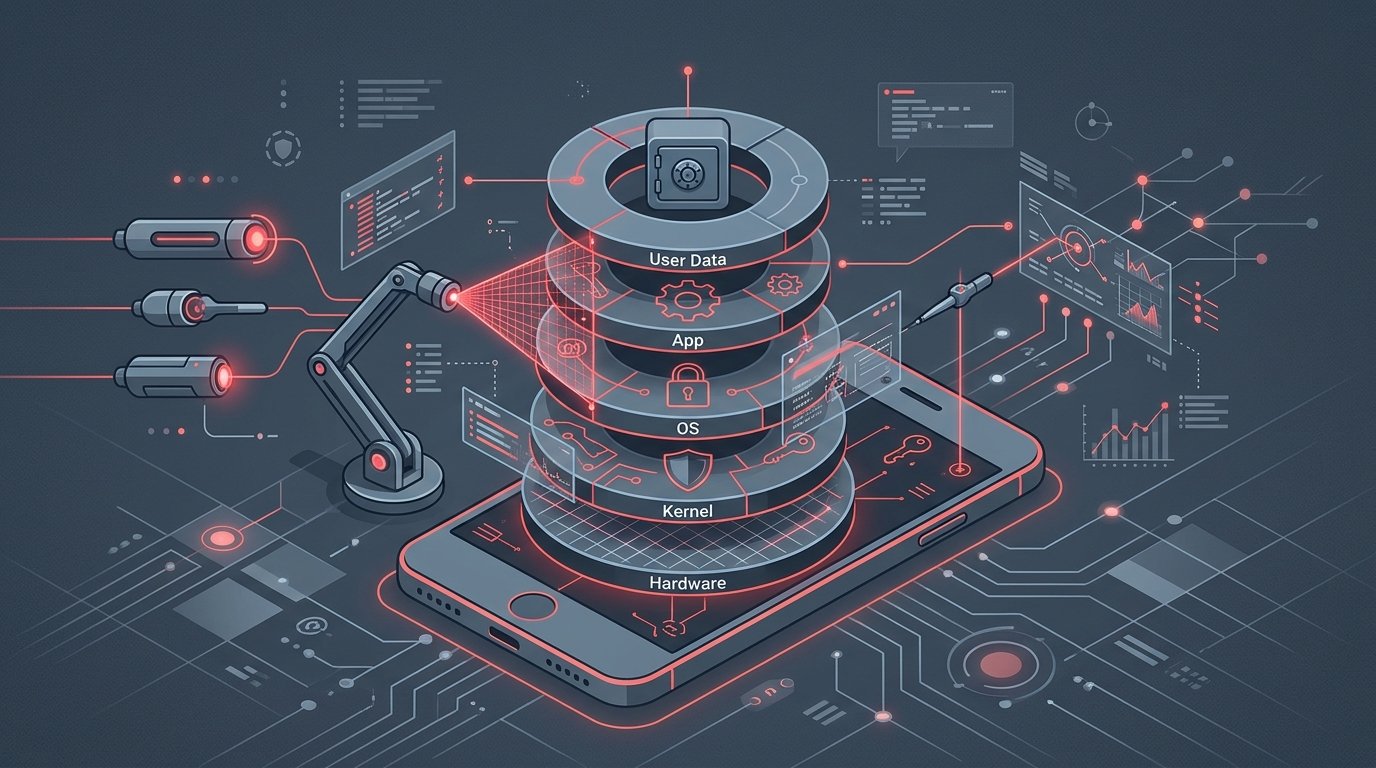
Security firm iVerify published additional details on October 8 and October 9, 2026, revealing a stealthier evolution called P7 DarkSword. According to reporting from The Hacker News, this newer variant introduced automated extraction tools aimed directly at the iOS Keychain. The software was engineered to harvest saved login credentials and systematically hunt down local cryptocurrency wallet files without alerting the device owner.
Unlike attacks that require victims to approve suspicious configuration profiles or manually install malicious profiles, DarkSword can infect phones passively. Users can encounter the exploit simply by loading a malicious webpage in Safari or clicking deceptive web advertisements. Once the browser processes the exploit payload, the attacker gains entry to underlying device storage.
My Thoughts on These Online Scams
In the online world today, frauds like this have become an everyday routine.
Tracing the $4.06 Million TRON Wallet Drain
Between October 5 and November 4, 2026, a widespread multi-chain theft campaign emptied hundreds of mobile self-custody wallets. Blockchain intelligence firm Bitquery published forensic findings on November 5, 2026, revealing that attackers stole $4.06 million in Tether (USDT). The stolen funds were taken from 365 individual TRON wallets linked directly to confirmed iPhone compromises.
As documented by The Defiant, the attackers ran a highly organized backend structure to handle the stolen funds. The theft network used 43 distinct collection wallets, all supplied with network energy and gas from a single shared transaction-fee wallet. This automated setup allowed the criminal operation to sweep balances out of victim accounts almost instantaneously.
The campaign went beyond the TRON blockchain. Bitquery discovered that the same hacking infrastructure emptied 65 additional wallets across eight other networks, including Ethereum and Solana. The wide spread of networks shows how attackers use centralized fee management to coordinate asset theft across distinct ecosystems.
| Metric | Recorded Details |
|---|---|
| Total TRON Losses | $4.06 million in USDT |
| TRON Wallets Compromised | 365 wallets |
| Attacker Collection Wallets | 43 active addresses |
| Other Chains Targeted | 8 blockchains (including Ethereum and Solana) |
| Non-TRON Wallets Emptied | 65 wallets |
Weekly Losses and Affected Wallet Apps
Independent security groups began noticing sudden spikes in mobile wallet balances disappearing toward late October 2026. On November 5, 2026, Web3 security firm GoPlus Security issued an alert using data compiled by the Security Alliance (SEAL). The warning outlined direct incidents involving users of popular self-custody mobile apps, such as Trust Wallet and Uniswap Wallet.
On November 6, 2026, TokenPost reported that self-custody iOS wallet losses totaled approximately $127,000 across six confirmed incidents between October 28 and November 3, 2026. That loss followed an even larger wave during the preceding week, where four separate incidents resulted in $434,000 in stolen tokens. Combined, SEAL monitored roughly $561,000 in direct user losses over that two-week period.
The geographic distribution of victims showed clear regional targeting. GoPlus Security noted that direct incidents were heavily concentrated among users in Russia, Ukraine, and Kazakhstan. Earlier DarkSword reconnaissance and exploitation campaigns documented by iVerify also uncovered targets in Turkey, Malaysia, and Saudi Arabia.
System-Level Exploits vs. Wallet Security
When crypto balances disappear, users often assume that the wallet app had a security flaw. In this case, neither Trust Wallet nor Uniswap Wallet suffered a code breach or server vulnerability. The applications functioned exactly as designed, but the underlying operating system failed to keep their local storage secure.
When an exploit chain like DarkSword compromises an iPhone, it breaks out of the standard application sandbox. Normally, iOS prevents one app from reading the files or memory of another app. DarkSword circumvents these permissions, granting attackers access to the encrypted iOS Keychain and application documents where encrypted keys reside.
Once attackers capture wallet seed phrases or local decryption passwords, they rebuild the wallet on their own hardware. From there, they broadcast signed transfer transactions directly to public blockchains. Because transactions on decentralized networks like TRON and Solana are permanent, victims cannot request a reversal or freeze the assets through app support. You can read more about how mobile platforms handle baseline protections in our overview of cybersecurity threats and defense tactics.
What Remains Uncertain About the Attacks
Although security researchers have gathered substantial on-chain and device data, key technical and organizational details remain unresolved. GoPlus Security pointed out that while DarkSword and an older exploit tool named Coruna are prime suspects, forensic teams have not definitively proven that DarkSword caused every single reported wallet drain.
The identity of the group managing the operation also remains unconfirmed. Threat analysts have observed DarkSword components used by commercial spyware vendors, Russian-aligned threat clusters such as UNC6353 (also known as Star Blizzard), and independent cybercriminals who buy exploit kits on secondary markets. It is not clear whether one group executed the thefts or multiple actors purchased the same tooling.
Finally, the true financial scale of the campaign is difficult to measure. The $561,000 figure tracked by SEAL reflects verified victim incident reports submitted directly to security platforms. In contrast, Bitquery tracked $4.06 million across 365 TRON wallets tied to the attacker infrastructure. The full amount stolen from unreported victims worldwide remains unknown.
What This Means for You: How to Protect Your Mobile Wallet
If you manage cryptocurrency on an Apple device, relying solely on face recognition and default phone settings is not enough. You should take immediate steps to reduce your exposure to browser-based and system-level exploits:
- Update iOS immediately: Open Settings > General > Software Update and install the latest available patch from Apple. DarkSword relies on vulnerabilities found in iOS 18.4 through 18.7, while older exploit kits like Coruna targeted iOS 13 through iOS 17.2.1.
- Clear sensitive data off local storage: Never store seed phrases, backup private keys, or wallet passwords in Apple Notes, Photos, iCloud Keychain, screenshots, or messaging apps. If an exploit compromises your Keychain or file directory, unencrypted notes are the first files attackers scan.
- Move funds to dedicated hardware storage: For high-value digital balances, move your private keys off consumer phones entirely. Dedicated hardware wallets from brands like Trezor, Ledger, or Keystone keep private keys isolated on offline chips, preventing browser exploits from reading them. You can check our guide to modern tech gadgets and hardware for secure device options.
- Inspect device management profiles: Go to Settings > General > VPN & Device Management. Verify that no unrecognized corporate profiles or enterprise certificates are installed on your personal device, and delete anything you did not manually configure.
- Avoid browsing inside wallet apps: Do not use integrated Web3 wallet browsers to visit unknown websites, and avoid clicking promotional cryptocurrency links inside Safari or social media feeds.
Frequently asked questions
Was Trust Wallet or Uniswap hacked directly?
No. Security firms have confirmed that the underlying code of Trust Wallet and Uniswap Wallet was not breached. The attackers instead compromised outdated iOS software to read device storage and harvest credentials locally.
Am I protected if I already run the latest iOS release?
Yes. Installing the latest official updates from Apple patches the specific system flaws used by the DarkSword and Coruna exploit chains to gain unauthorized system access.
Can drained cryptocurrency be retrieved?
Generally, no. Because blockchain transactions are permanent and decentralized, drained funds cannot be refunded or cancelled unless law enforcement intervenes to seize assets at centralized exchanges.
Sources
- lookout.com (lookout.com)
- thehackernews.com (thehackernews.com)
- vietnamnet.vn (vietnamnet.vn)
- cryptoslate.com (cryptoslate.com)
- thedefiant.io (thedefiant.io)
- bitquery.io (bitquery.io)
- kucoin.com (kucoin.com)
- kucoin.com (kucoin.com)
Images marked “AI-generated image” were created with Google Gemini for illustration.
