
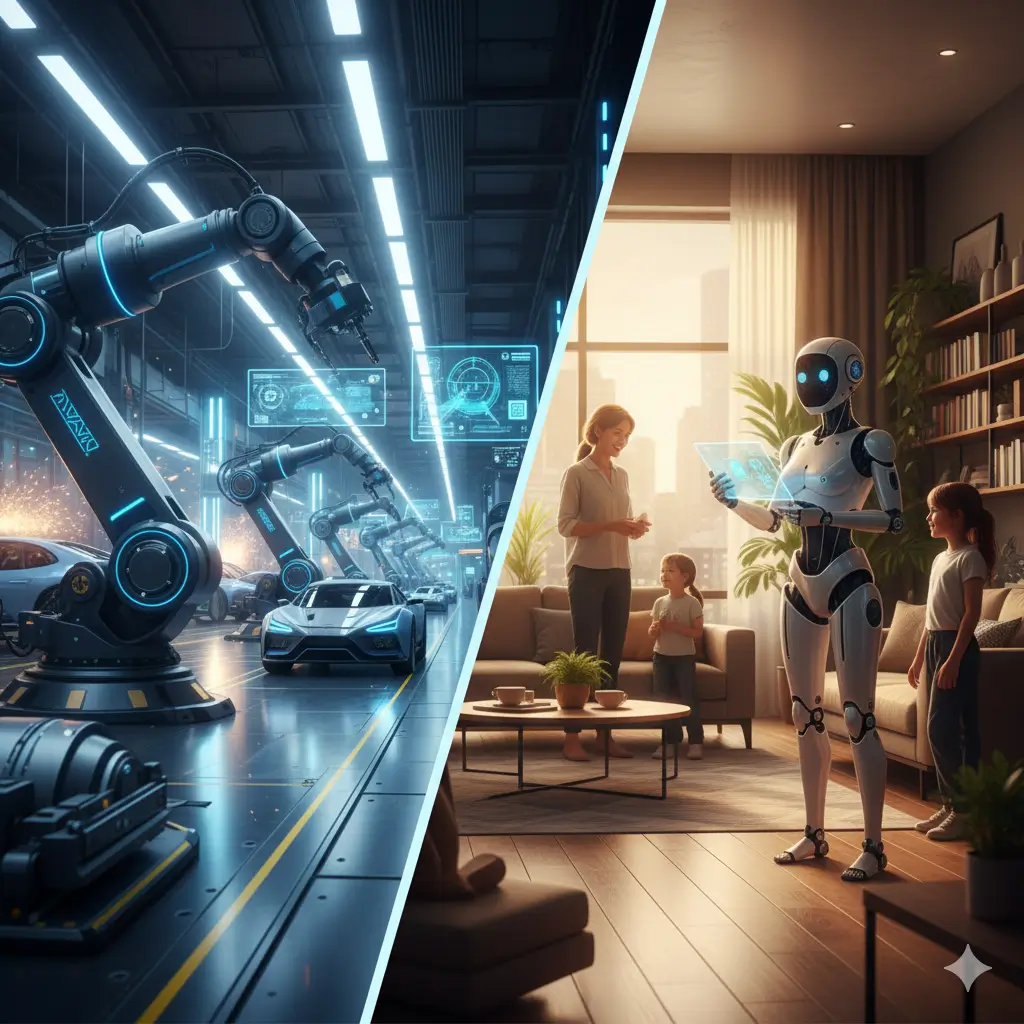
Introduction: A World Where Robots Are Our Everyday Companions
Not too long ago, robots were something we only saw in sci-fi movies — sleek machines that could walk, talk, and even think like humans. Fast forward to today, and that “fiction” is steadily becoming our reality. Robots have evolved from massive industrial arms on factory floors to compact, intelligent assistants in our homes, workplaces, and even hospitals.
The future of robotics isn’t just about machines doing human tasks — it’s about how seamlessly they’ll integrate into our daily lives, making everything from manufacturing to home chores more efficient, precise, and personalized.
1. From Industrial Giants to Intelligent Assistants
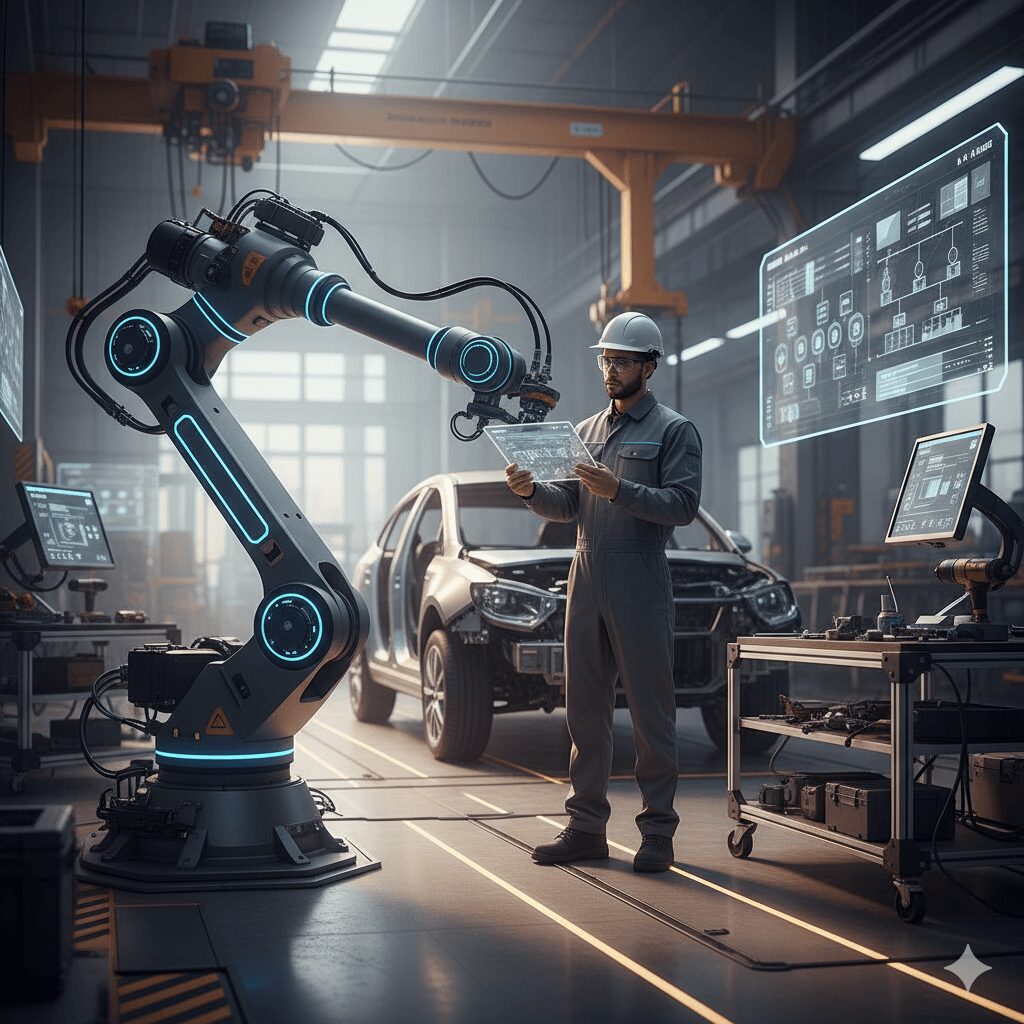
When we think about robotics, most of us picture those large robotic arms assembling cars or packaging products in a factory. And that’s true — industrial robots have dominated the robotics landscape for decades. But the future points toward something even more exciting: collaborative robots, or cobots.
What Are Cobots?
Cobots are designed to work alongside humans, not replace them. Unlike traditional robots that need safety cages, cobots use advanced sensors and AI to collaborate safely and intelligently.
Example:
At BMW factories, cobots help workers assemble delicate components that require precision. These cobots don’t tire, make fewer mistakes, and free up human workers for creative and problem-solving tasks.
2. Robotics Entering Our Homes: The Smart Revolution
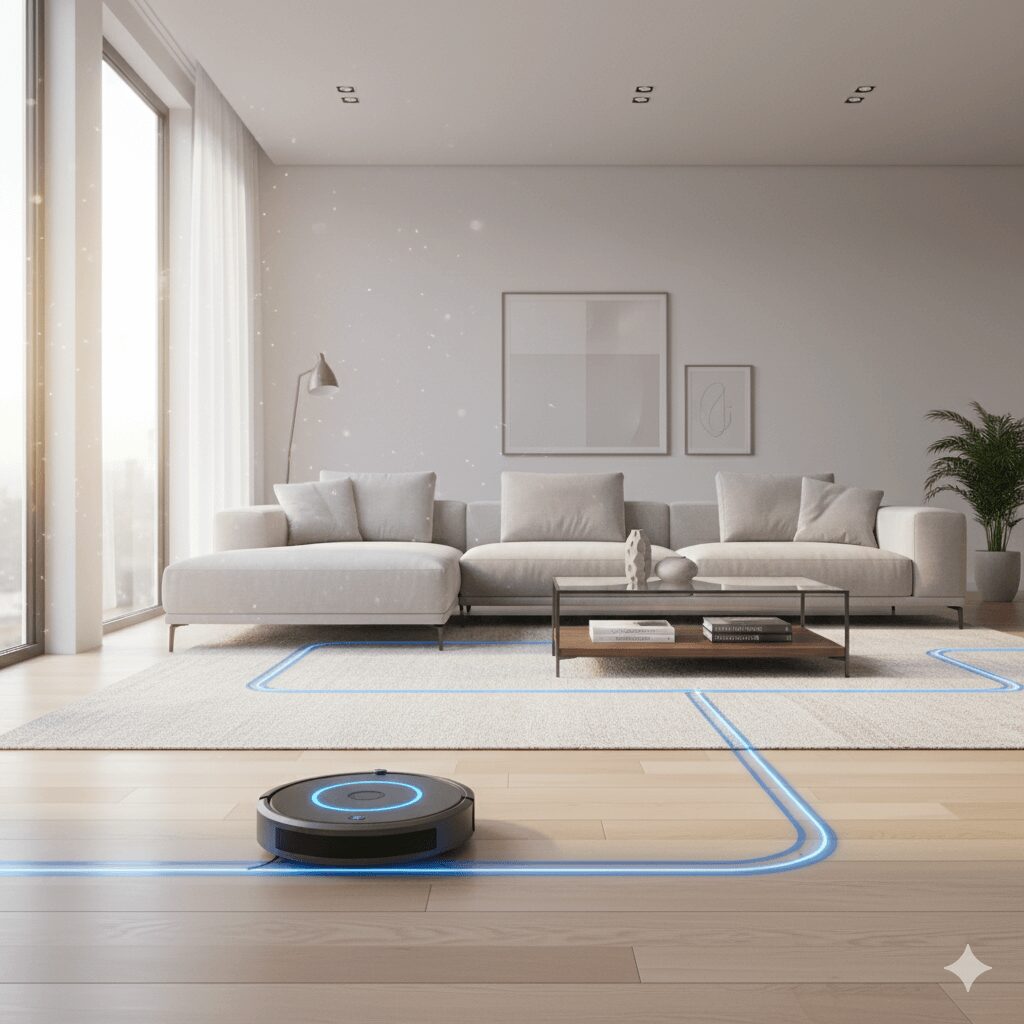
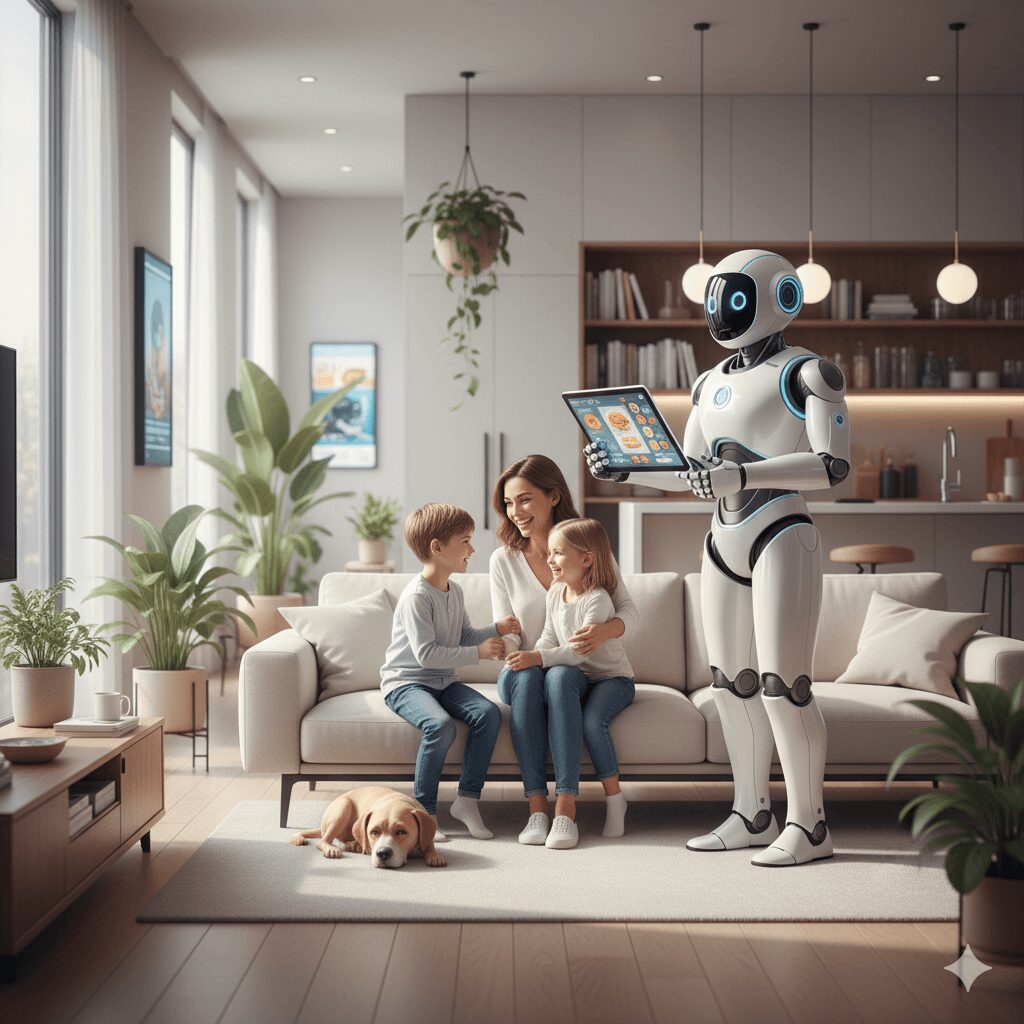
Today’s homes are becoming “smart,” and robots are at the heart of this transformation. From cleaning floors to offering companionship, robots are moving from industrial zones to living rooms — and they’re learning fast.
Popular Home Robotics Examples
- Robot Vacuums: Brands like iRobot Roomba and Xiaomi Mi Robot have turned tedious cleaning into a hands-free task.
- Social Robots: Devices like Amazon Astro and ElliQ can recognize faces, answer questions, and even hold conversations.
- Kitchen Assistants: Robotic arms such as Moley Kitchen Robot can cook your favorite meal and clean up afterward.
Why it matters:
As AI and robotics merge, home robots are evolving from simple task performers to context-aware assistants that understand routines, preferences, and emotions.
3. Healthcare Robots: Healing With Precision and Compassion
The healthcare industry is one of the fastest-growing fields for robotics. These machines aren’t just saving doctors’ time — they’re saving lives.
Types of Healthcare Robots:
- Surgical Robots: Systems like da Vinci Surgical System allow surgeons to perform delicate operations with unmatched precision.
- Caregiver Robots: Devices like Robear in Japan help lift patients, monitor vitals, and provide companionship to the elderly.
- Delivery Robots: In hospitals, autonomous robots transport medicine, samples, and meals — minimizing human error and infection risk.
Example:
During the COVID-19 pandemic, many hospitals used UV-disinfection robots to sterilize rooms and reduce human exposure.

4. Education and Child Development: Robots as Learning Partners
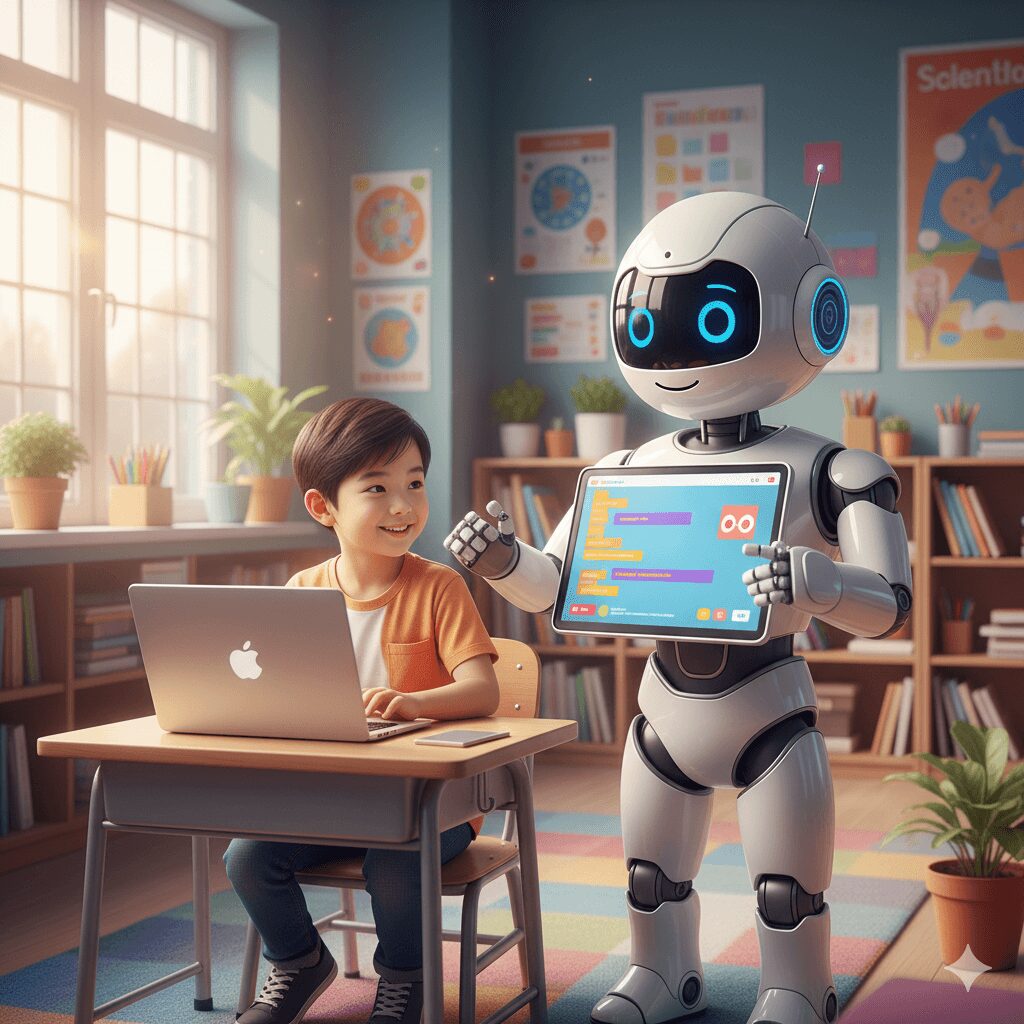
Classrooms are also seeing a robotic transformation. Robots are being used as interactive teaching aids, language tutors, and STEM learning companions.
Examples of Educational Robots:
- NAO Robot: A humanoid robot used in schools to teach coding and social interaction.
- LEGO Mindstorms: A robotics kit that helps children learn programming through play.
- Moxie: Designed to support emotional learning and communication for kids.
Why it’s important:
These robots aren’t replacing teachers — they’re enhancing education by making learning more engaging and personalized.
5. Service and Delivery Robots: Redefining Convenience
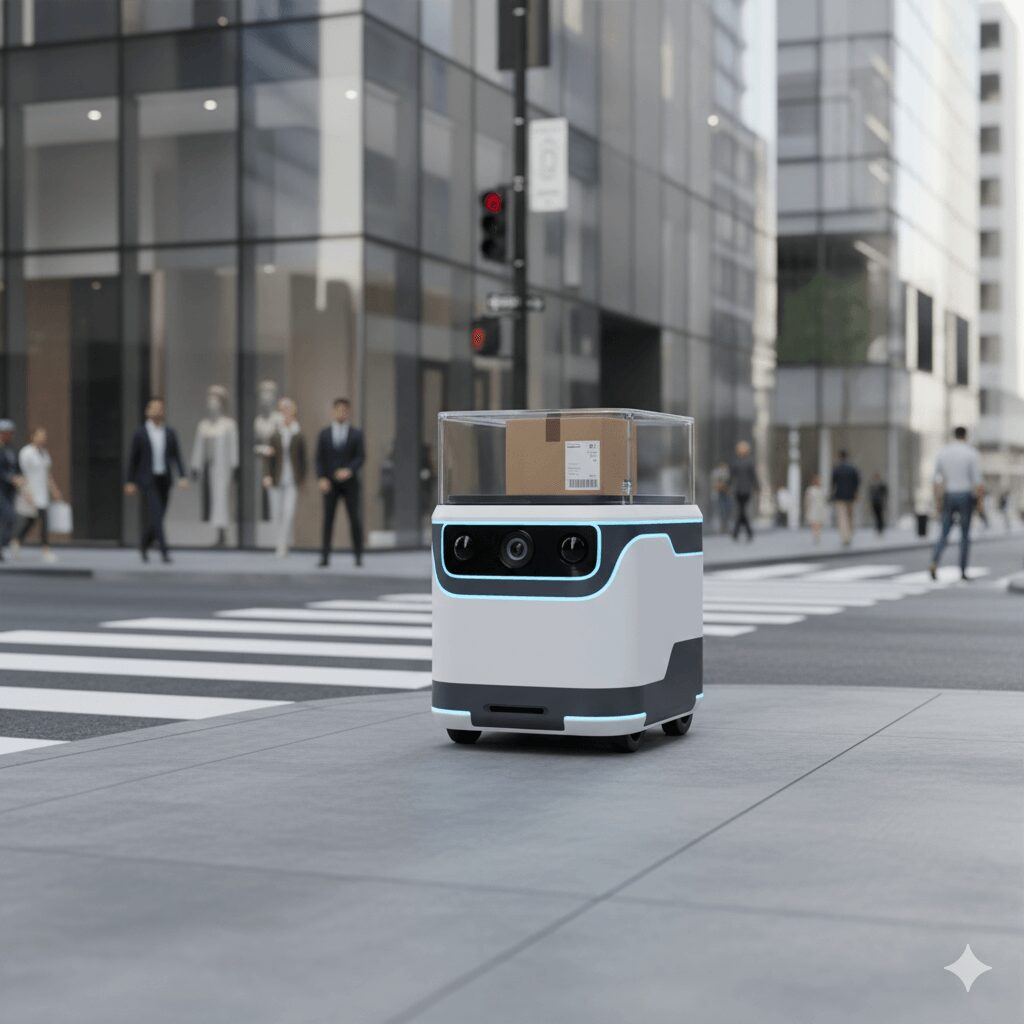
You might have already seen delivery robots rolling down sidewalks or drones hovering above with parcels. Robotics in the service industry is becoming a game-changer for logistics and hospitality.
Examples in the Real World:
- Amazon Scout and Starship Technologies robots are delivering groceries and packages autonomously.
- Hotel Robots like those at Aloft Hotels deliver room service and toiletries with a friendly smile (or digital face).
- Restaurant Robots can take orders, cook, and serve — improving consistency and customer experience.
6. The Emotional Side of Robotics: Companionship and Care
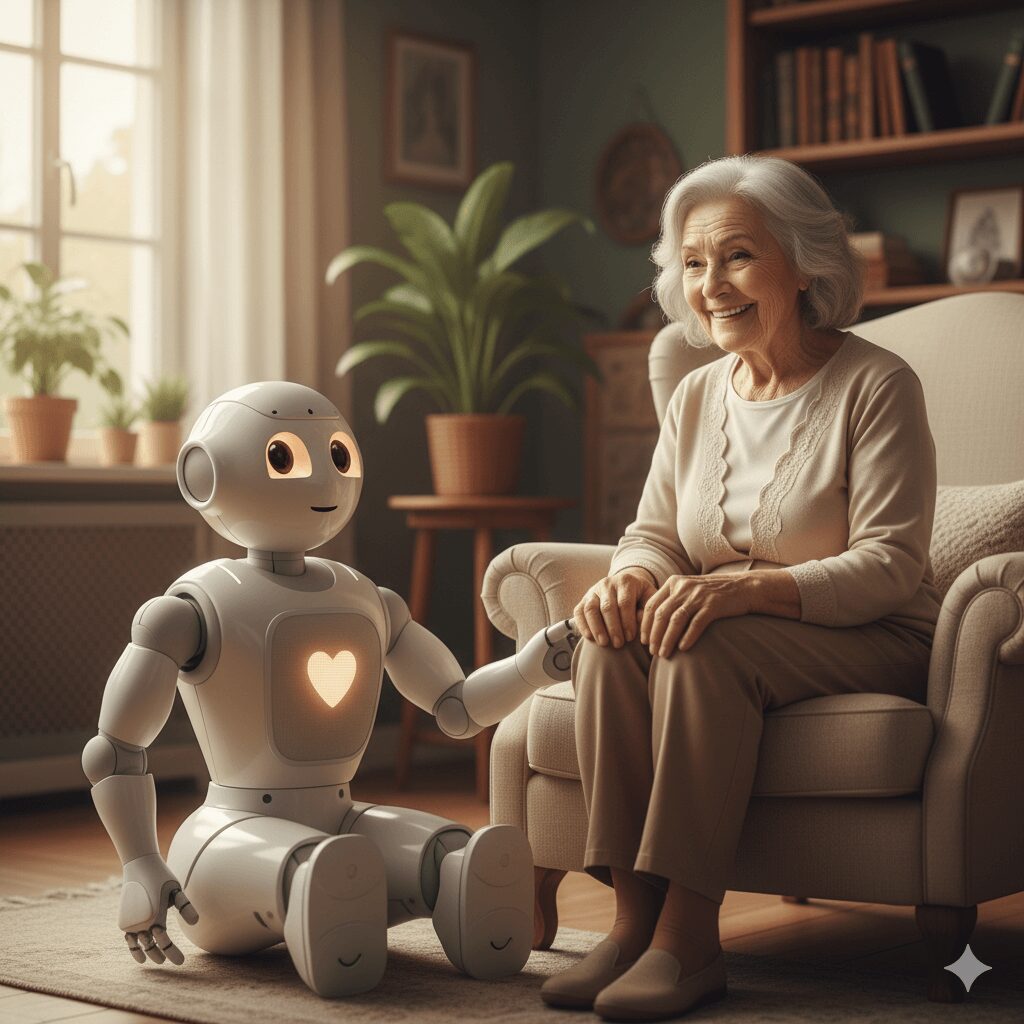
The next big leap isn’t just in functionality — it’s emotional intelligence. Robots are starting to understand and respond to human emotions.
Example:
- Sony’s Aibo robot dog recognizes its owner’s face and mood.
- Pepper robot from SoftBank can read facial expressions and engage in empathetic conversation.
For elderly or isolated individuals, these robots provide not only help but companionship, bridging the gap between technology and human connection.
7. Future Trends: Where Robotics Is Headed Next
The next decade will bring incredible innovations as robotics merges with AI, machine learning, and the Internet of Things (IoT).
Key Trends to Watch:
- AI-Driven Autonomy: Robots that make decisions on the fly, adapting to unpredictable environments.
- Swarm Robotics: Multiple robots working together — used in agriculture, search-and-rescue, or warehouse automation.
- Soft Robotics: Robots made from flexible materials that mimic human muscles — ideal for healthcare and delicate manufacturing.
- Personalized Robots: Devices that learn your habits and evolve over time, creating a tailored user experience.
- Human-Robot Collaboration: Robots will handle repetitive tasks while humans focus on creativity and innovation.
8. Challenges Ahead: Balancing Innovation and Ethics
While robotics brings endless possibilities, it also raises ethical and social challenges that can’t be ignored.
Key Concerns:
- Job Displacement: Automation may replace certain jobs, requiring workforce reskilling.
- Privacy: Home robots with cameras and microphones raise data security concerns.
- Dependence: Overreliance on robots might reduce human social interaction and manual skills.
Tip:
Policymakers, developers, and businesses must work together to ensure ethical use, transparency, and equitable benefits of robotics for all.
Conclusion: The Age of Human-Robot Harmony
The future of robotics is not a battle between humans and machines — it’s a partnership. Robots are set to become our assistants, caregivers, coworkers, and even companions. The goal isn’t to replace humans but to enhance human potential, allowing us to focus on creativity, empathy, and innovation.
From factory floors to living rooms, robotics is redefining how we live, work, and connect. The question isn’t whether robots will be part of our lives — it’s how we’ll shape that relationship for a better, smarter, and more compassionate future.
