
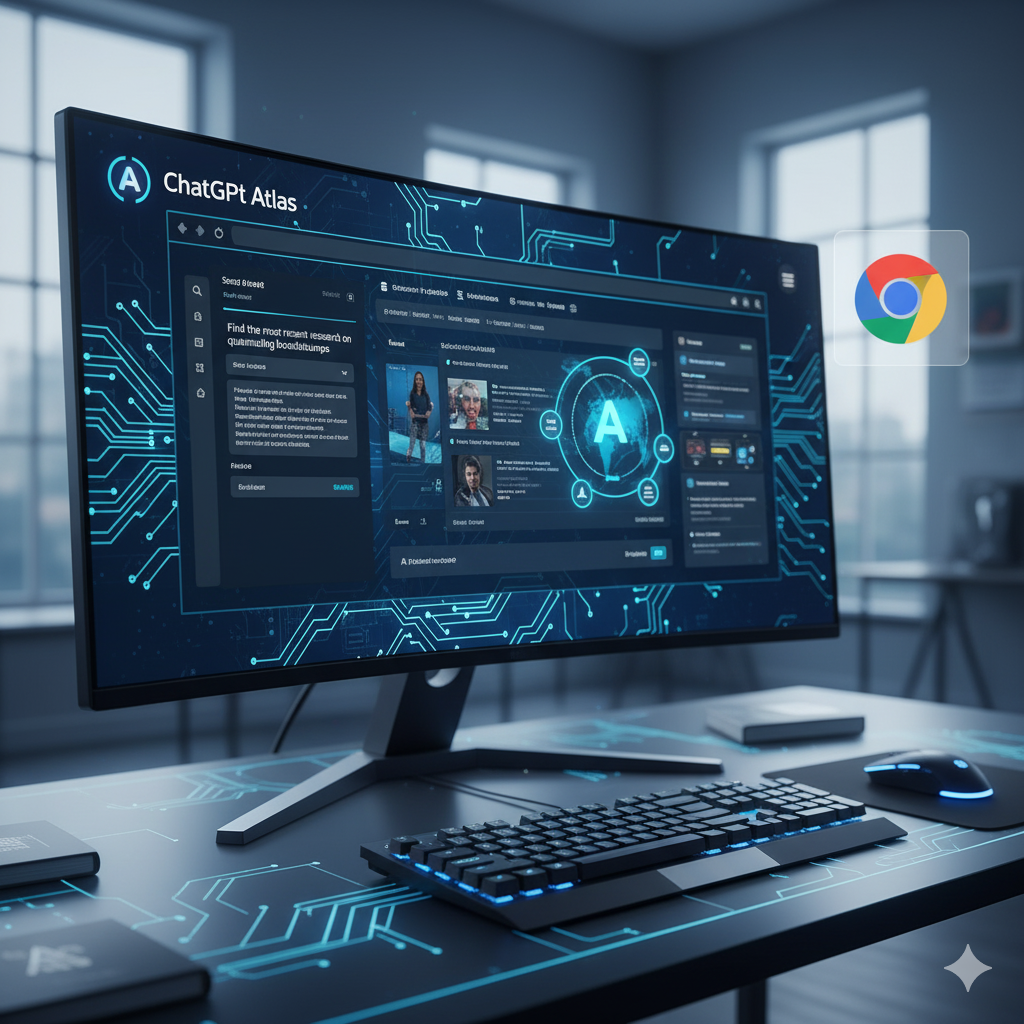
OpenAI Enters the Browser Battle
OpenAI — the company behind ChatGPT — has officially announced its new AI-powered web browser called ChatGPT Atlas, marking a bold move to compete directly with Google Chrome and other mainstream browsers.
According to reports from AP News, this new browser is designed not just for traditional web surfing but to deliver an interactive, intelligent browsing experience that integrates AI assistance directly into the browser window.
What Makes ChatGPT Atlas Different?
- Built-in ChatGPT Assistant
Users can interact with ChatGPT directly inside the browser while browsing any website — ask questions, get summaries, or perform tasks without switching tabs. - “Agent Mode” for Automation
A premium feature called Agent Mode allows users to automate online actions such as booking tickets, filling forms, or shopping — all through AI-driven commands. - Smart Memory and Personalization
ChatGPT Atlas can remember user preferences and adapt to their browsing style over time, offering a more personalized experience compared to traditional browsers. - Privacy-Aware Design
OpenAI claims that the browser will include advanced privacy options, giving users more control over how their data is used during AI interactions.

image credit: openai
A Direct Challenge to Google
For over a decade, Google Chrome has dominated the browser market. However, ChatGPT Atlas introduces a new dimension — AI-first browsing — where users don’t just search for information but converse with the web itself.
If widely adopted, this could reshape how people interact with websites, search engines, and even online advertising. Analysts suggest it might redefine the relationship between browsing, AI, and search in the coming years.
Potential Challenges Ahead
Despite its innovation, OpenAI faces major hurdles:
- Market share dominance of Google Chrome.
- Privacy and transparency concerns around AI-driven browsing.
- Impact on publishers, since users may consume summarized content instead of visiting full web pages.
Still, experts believe OpenAI’s entry into the browser space shows how rapidly the AI-driven web ecosystem is evolving.
Conclusion
OpenAI’s ChatGPT Atlas browser signals the start of a new era where browsers become intelligent assistants rather than passive tools. Whether it can truly rival Google Chrome remains to be seen, but one thing is clear — the future of browsing just became a lot smarter.
Image Credits:
